

Has Your Cat Started Avoiding High Places? A Complete Guide to the Differences Between Simple Aging and Osteoarthritis, and Signals to Visit the Vet
Magentalab Research Team
July 28, 2026
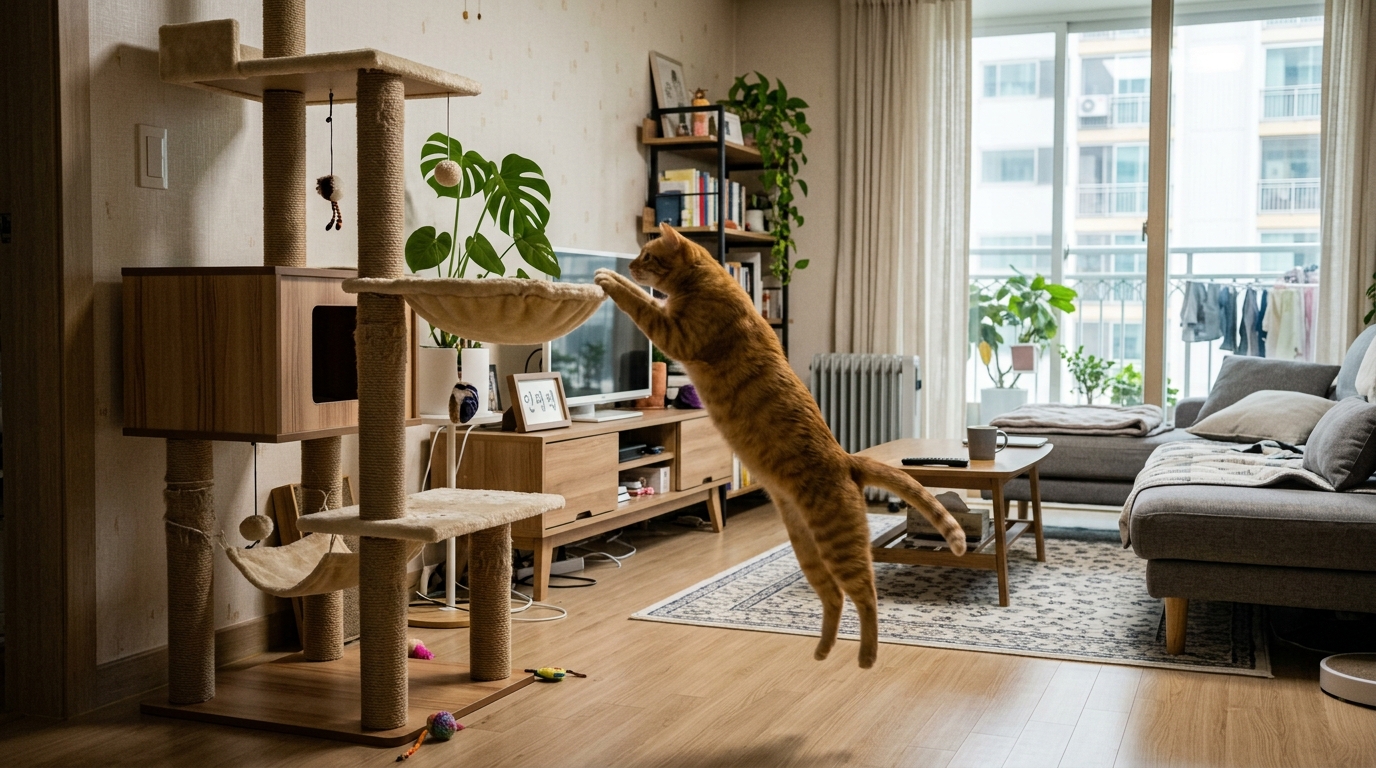
Hello! I am Ansim-i the Dachshund, the Chief Researcher at Magentalab Pet Research Institute! I have brought an informative research report today for the happy journey of you and your pets.
Have you noticed your precious feline friend, who used to proudly look down at us from the top of their high cat tree, staying only on the floor or a low sofa lately? If you brushed it off, thinking, “My baby is just getting older and finds everything bothersome now,” you must read today’s research report to the end. We will clearly uncover the secret hidden behind your cat’s behavioral changes.

| Joint Danger Signal Grade | Key Behavioral Signals | Veterinary Causes & Physical Changes | Researcher Ansim-i’s Urgent Home Care Prescription |
| Normal & Simple Aging (Safe Stage) | Jumping speed is slightly slower, but they safely land on their own after hesitating. | Natural decrease in muscle strength and flexibility due to aging. | Place gentle shock-absorbing pads and low-profile cushions under vertical cat trees. |
| Early Stage of Osteoarthritis (Caution Stage) | Only looks up at high places and repeatedly gives up, or sits down while trying to jump. | Onset of friction pain caused by osteoarthritis (OA) and chondromalacia. | Immediately install non-slip pet steps (ramps) at the bottom of frequently used beds or windowsills. |
| Advanced Chronic DJD Stage (Hyper-Acute Emergency) | Cannot groom their back or hips, resulting in dull fur, and hisses when touched. | Severe Degenerative Joint Disease (DJD) and rapid decline in immunity due to chronic pain. | [Hyper-Acute] Lower the thresholds of food bowls and litter boxes to the minimum and visit the vet immediately for anti-inflammatory treatment. |
1. Why is the cat who loved vertical spaces suddenly staying only on the floor?
For cats, vertical space is not just a playground, but a “psychological safe zone” where they confirm their territory and find peace. If such a cat begins to avoid climbing to high places, it means there has been a very significant change in their quality of life.
Pet parents easily dismiss this as a simple “lethargy due to aging,” but it is highly likely a desperate pain signal sent by their body. Because of their wild instincts, cats are experts at concealing pain, thoroughly hiding their physical discomfort.
2. Is it simply “because of age (aging),” or is it due to painful “osteoarthritis”?
It is very important to distinguish whether your baby’s movements have just slowed down due to the passage of time or if they are suffering from Degenerative Joint Disease (DJD). Researcher Ansim-i will provide clear criteria for judgment based on extensive veterinary clinical data.

2-1. Behavioral Changes in the Normal Aging Process
As time passes, cats also lose muscle mass and flexibility. However, if it is “normal aging,” they will exhibit the following characteristics:
-
When climbing to a high place, their flexibility and speed are slower than before, but they still attempt and succeed in jumping normally.
-
Even if they momentarily hesitate when coming down from a high place, their movements are not unnatural, and their gait does not show signs of lameness.
-
Their sleeping time increases, but when awake, they maintain a normal, symmetrical gait.
2-2. The Crucial Differences That Point to a Disease (Feline Osteoarthritis, DJD)
On the other hand, if they are in a “disease state” where the cartilage is worn out and the joints are inflamed, accompanied by chronic pain, their behavior changes completely.
-
They only look up at high places and give up: The phenomenon of taking a posture to jump and then sitting down due to pain repeats itself.
-
They show a stepped limping movement: They carefully detour up to heights they used to jump in one go, using chairs, furniture, or boxes as stepping stones.
-
They hesitate extremely when coming down and may even vocalize: This happens because the impact transmitted through their paw pads upon landing causes extreme pain in the inflamed joints.
-
They cannot complete physical grooming: Because their joints hurt, making it difficult to bend their spine and body, the fur specifically around their back, hips, and tail becomes matted and dull.

3. [Self-Diagnosis] Normal Behavior vs. Danger Signals Requiring Vet Treatment
Carefully check what stage your baby’s condition is currently in using the comparison chart below.
| Category | Normal & Simple Aging (Safe Stage) | Danger & Vet Visit Required (Caution Stage) |
| Jumping Attempt | Hesitates but eventually jumps up smoothly on their own. | Only looks at high places and gives up, or has a high jump failure rate. |
| Walking Posture | Their gait has only slightly slowed down, and they walk normally. | When viewed from behind, they sway their hips while walking or their legs tremble. |
| Grooming Status | Grooms their whole body cleanly, leaving their fur glossy. | Specifically cannot groom around their hind legs, back, and tail, causing the fur to mat. |
| Personality Change | Still gentle and enjoys physical affection from their pet parents. | Hisses or tries to bite when you attempt to touch their body (pain response). |

4. Medical Fact Check on Feline Joint Disease (DJD) (YMYL Guide)
4-1. Feline Osteoarthritis is Very Difficult to Detect
According to medical statistical data, it has been confirmed through X-rays that 60% of cats over 6 years old and about 90% of senior cats over 12 years old suffer from Degenerative Joint Disease (DJD). However, the percentage of those who actually visit the clinic and receive treatment is remarkably low. This is because cats do not show visible limping symptoms like dogs do, but rather cope by “voluntarily reducing their activity level to avoid pain.” Therefore, a pet parent’s careful behavioral observation is the only key to noticing their baby’s suffering.

4-2. Environmental Improvements and Care Methods Pet Parents Can Do at Home
If your baby’s joints have started to hurt from inflammation, you must immediately change their living environment in parallel with veterinary treatment.
-
Install Steps (Ramps): Please install non-slip pet stairs or ramps specifically for cats under the bed, sofa, or frequently visited windowsills.
-
Lower the Thresholds of Food Bowls and Litter Boxes: Bending their head to eat or crossing a threshold to enter the litter box puts a massive strain on sore joints. Please replace them with litter boxes that have low entrances.
-
Weight Management: Obesity is the biggest enemy of osteoarthritis! Strict weight management through a prescription diet in consultation with your veterinarian is necessary.
-
Feed Joint Supplements: High-quality joint supplements containing Omega-3 fatty acids, glucosamine, and chondroitin greatly help soften cartilage and relieve inflammation.

5. Researcher Ansim-i’s Final Request: For a Pain-Free Cat Life
A cat climbing up to high places less frequently is not them becoming mature with age, but could be a silent signal crying out, “Mom, Dad, my joints throb so much every time I move.”
If you neglect it, simply assuming it’s due to age, it can lead to more severe illnesses like depression or anorexia induced by chronic pain. If they show even the slightest suspicious behavior, we strongly recommend that you visit a veterinary clinic to get an X-ray examination and a professional diagnosis. So that our precious babies can jump lightly without pain until the last moment of their lives, please watch their steps carefully starting today! This has been Ansim-i, the Chief Researcher at Magentalab!
Recommended Research Data 🕸️
Is Your Dog Not the Same as Before? How to Tell the Difference Between Normal Aging and Danger Signals in Senior Dogs

Symptoms and Treatment of Hyperthyroidism in Senior Cats: Why They Eat Well but Lose Weight and Yowl at Dawn

Tips for Improving the Litter Box Environment to Resolve Feline Idiopathic Cystitis Causes and Hematuria Symptoms
Comments (0)
No comments yet. Be the first to leave one!