
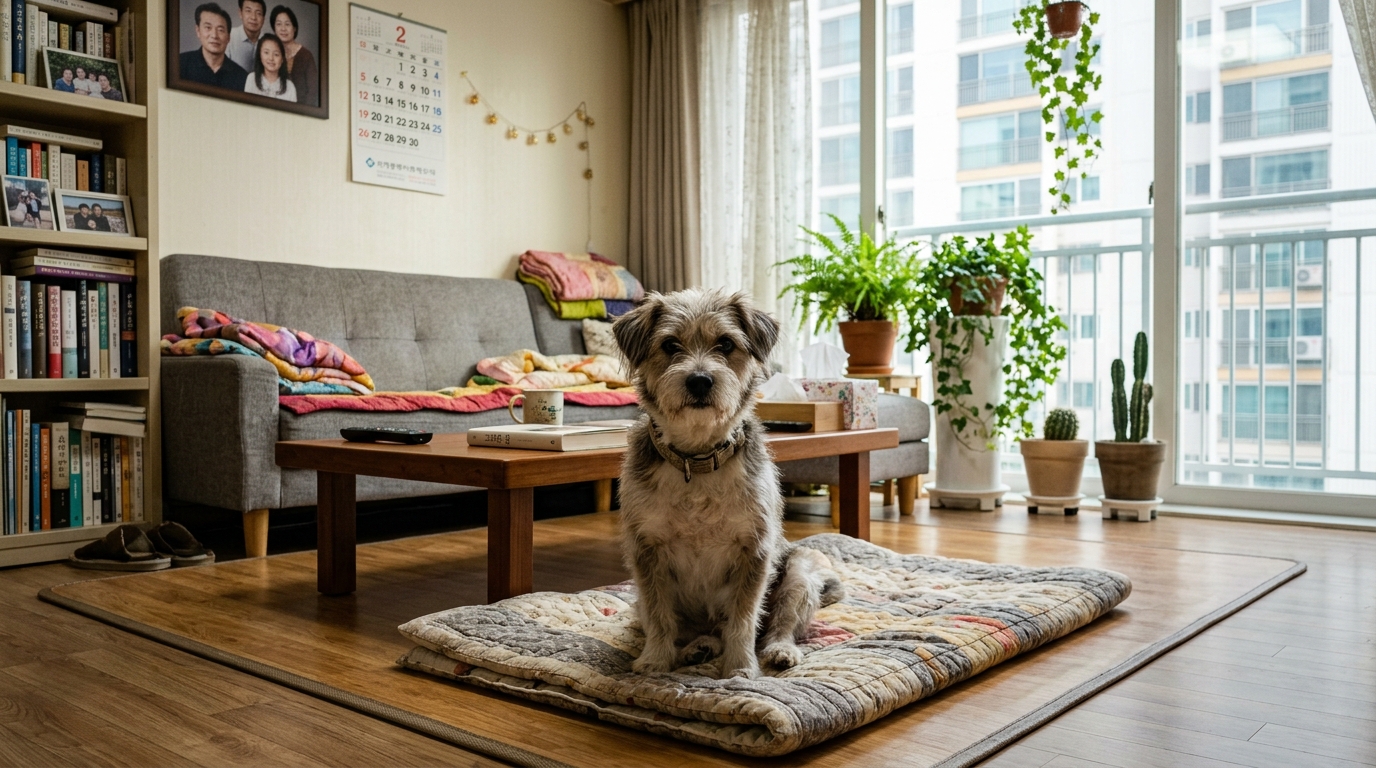
Is Your Dog Not the Same as Before? How to Tell the Difference Between Normal Aging and Danger Signals in Senior Dogs
Magentalab Research Team
July 28, 2026
Hello! I am Ansim-i the Dachshund, the Chief Researcher at Magentalab Pet Research Institute!
Have you ever suddenly looked at your baby and felt your heart sink because they are sleeping much more than before or showing little interest even when you bring out their favorite toys? I, Ansim-i, deeply understand the anxious hearts of pet parents who worry, “Is it just because they are getting older?” or “Could they be sick?”
In today’s research report (referencing the file 행동_교정_핵심_용어_대조표.csv), I will clearly distinguish between perfectly natural changes that come with aging and the critical danger signals you should never overlook. I have carefully broken everything down with medical fact checks, so you can follow along with peace of mind!
1. Natural Signs of Aging: Normal Behavioral Changes
Just like humans, as dogs age, their metabolic rate drops and cell regeneration slows down. The following changes, commonly seen in daily life, are natural adaptation processes to the passage of time.
① Increased Sleep: The Instinct to Conserve Energy
As dogs enter their senior years, their brains and bodies require more time to recover from fatigue. While an adult dog’s average sleep time is 12 to 14 hours, a senior dog’s sleep can increase to 16 to 18 hours a day. This is a very wise physiological response to self-regulate and conserve energy as the years go by.

② Decreased Activity and Less Play: Changes in Joints and Stamina
Please do not feel too sad if they do not play tug-of-war as vigorously as before or wag their tails less when you ask if they want to go for a walk. Their cardiopulmonary function and muscle strength naturally decrease, and they are simply adjusting their activity radius and intensity. Rather than forcing them to move, it is best to match their slowed tempo by switching to gentle nose-work activities or taking short walks on flat, paved paths.

2. Sensory Changes: A World Becoming Gradually Blurrier and Quieter
The decline in sensory organ function is a classic symptom of aging. As their ability to gather information decreases, their reaction time to pet parents’ cues naturally slows down.
① Hearing Loss: Reduced Reaction to Sounds
If your dog no longer reacts to the sound of the front door opening or a treat bag tearing, it is highly likely their hearing has weakened. Sometimes, they are misunderstood as being stubborn and ignoring the pet parent’s words, but in most cases, they genuinely cannot hear well enough to respond. At this stage, instead of calling them loudly, it is advisable to communicate by letting them feel the vibrations of your footsteps or by utilizing visual hand signals (body language).

② Vision Changes and Management: Blurring Sight
As dogs age, their vision declines due to conditions like nuclear sclerosis (where the lens hardens and turns a cloudy white) or cataracts. If your dog hesitates to walk in dark places or frequently bumps into things because they cannot adapt to the furniture layout, you should suspect a decline in vision. To help them feel secure, absolutely do not change the layout of your indoor furniture, and create a safe environment by attaching protective guards to sharp corners.

3. Danger Signals to Watch For: Canine Cognitive Dysfunction Syndrome (CCDS)
Beyond simple aging, the degenerative changes in brain neurons can lead to Canine Cognitive Dysfunction Syndrome (CCDS), commonly referred to as dog dementia. This is a clinical “disease” that requires proactive veterinary treatment and management from the pet parent.
The Crucial Differences Between Normal Aging and Dementia (CCDS)
Unlike normal aging, where a dog simply sleeps more and slows down, cognitive dysfunction involves direct errors in the brain’s cognitive areas. If you observe the following typical behavioral patterns, you must seek a veterinarian’s diagnosis without delay.
-
Disorientation: Standing blankly with their head pressed against a wall or corner (head pressing), or walking behind an open door and getting stuck in a narrow gap, unable to find their way out.
-
Sleep-Wake Cycle Reversal: Sleeping deeply all day long regardless of the hour, but aimlessly pacing around the house, barking, or whining all night long for no apparent reason.
-
Changes in Social Interactions: Failing to recognize family members they used to adore and avoiding them, or conversely, exhibiting severe separation anxiety and becoming overly clingy.

4. “Time for the Vet!” Normal Aging vs. Danger Signals Requiring Treatment
There are diseases where the “golden time” for treatment is easily missed if pet parents mistakenly attribute the symptoms to “just getting old.” The following symptoms are not signs of aging but warning lights of a disease requiring immediate medical intervention.
Ansim-i’s List of Immediate Vet Visit Signals
Distinguishing conditions that require medical intervention plays a decisive role in improving your senior dog’s quality of life and extending their lifespan.
| Category | Normal Range of Aging | Danger Signals (Requires Vet Visit) |
| Movement | Movements become slightly slower and walk times shorten. | Limping, screaming when lifted, trembling legs (Suspected osteoarthritis / Intervertebral Disc Disease (IVDD)). |
| Appetite / Weight | Weaker digestion, eating kibble more slowly. | Sudden complete loss of appetite, excessive drinking (polydipsia), rapid weight loss, or abdominal distention (Suspected kidney disease / Cushing’s disease). |
| Elimination Habits | Slightly increased frequency of urination. | Repeated inappropriate elimination outside designated spots, vocalizing in pain while urinating (Suspected urinary calculi / Cognitive dysfunction). |

The most important thing is the pet parent’s careful observation. Recording your dog’s gait, eye focus, and sleep patterns on video daily is tremendously helpful for your veterinarian to make an accurate diagnosis. Even if your baby becomes a little slower and clumsier, because you are there beside them with unwavering love, they will undoubtedly have the happiest day today! This has been Ansim-i, Chief Researcher at Magentalab Pet Research Institute!
Recommended Research Data 🕸️
Has Your Cat Started Avoiding High Places? A Complete Guide to the Differences Between Simple Aging and Osteoarthritis, and Signals to Visit the Vet

Canine Hypothyroidism: Causes and Solutions for Weight Gain and “Rat Tail” Hair Loss Despite Eating Less

Tips for Improving the Litter Box Environment to Resolve Feline Idiopathic Cystitis Causes and Hematuria Symptoms
Comments (0)
No comments yet. Be the first to leave one!