

Tips for Improving the Litter Box Environment to Resolve Feline Idiopathic Cystitis Causes and Hematuria Symptoms
Magentalab Research Team
July 26, 2026

Hello! I am Ansim-i the Dachshund, the Chief Researcher at Magentalab Pet Research Institute! Today, I’ve brought an informative research report for the happy journey of you and your pets.
When a cat visits the litter box dozens of times but cannot pass a single drop of urine, most pet parents suspect a bacterial infection or kidney disease. Surprisingly, however, there is a condition where a cat experiences severe pain and urinates blood despite having zero bacterial infection or stones in the bladder. The contradictory situation where a perfectly healthy cat suddenly urinates blood outside the litter box is driven by “invisible stress.” In today’s report, we will clearly analyze the reality of Feline Idiopathic Cystitis (FIC)—which sends countless pet parents rushing to the emergency room—and provide environmental management guidelines to resolve it.
Core Summary Details
-
Disease Name: Feline Idiopathic Cystitis (FIC)
-
Core Cause: Extreme stress due to environmental factors (not a bacterial infection)
-
Key Symptoms: Pollakiuria (frequent urination), dysuria (difficulty urinating), hematuria (blood in urine), periuria (eliminating outside the litter box), vocalization during urination
-
Essential Management: Increasing water intake (wet food), improving litter box environment (N+1 rule), securing vertical space
-
Emergency Situation: If a male cat experiences anuria (inability to urinate) for over 24 hours, visit the emergency room immediately.
Feline Idiopathic Cystitis: Causes, Stress, and Hematuria Symptoms
In Feline Idiopathic Cystitis (FIC), “idiopathic” means the exact cause is unknown. It is a disease where the bladder becomes inflamed even though physical causes like bacterial infections, stones, or tumors are not found during diagnostic tests. Continuous research in veterinary medicine has revealed that the most powerful trigger for this disease is “stress.”

When a cat is continuously exposed to stressful situations that stimulate the sympathetic nervous system, abnormalities occur in the body’s neuroendocrine system. This damages the glycosaminoglycan (GAG) layer that protects the inner lining of the bladder, allowing toxic substances in the urine to directly irritate the bladder wall. As a result, the bladder wall swells and bleeds, accompanied by severe pain and hematuria. Due to the pain, cats may frequent the litter box and vocalize, or they may perceive the litter box itself as a “painful space” and make elimination mistakes on soft surfaces like beds or blankets.
Litter Box Location, Litter Types, and Stress-Inducing Environments
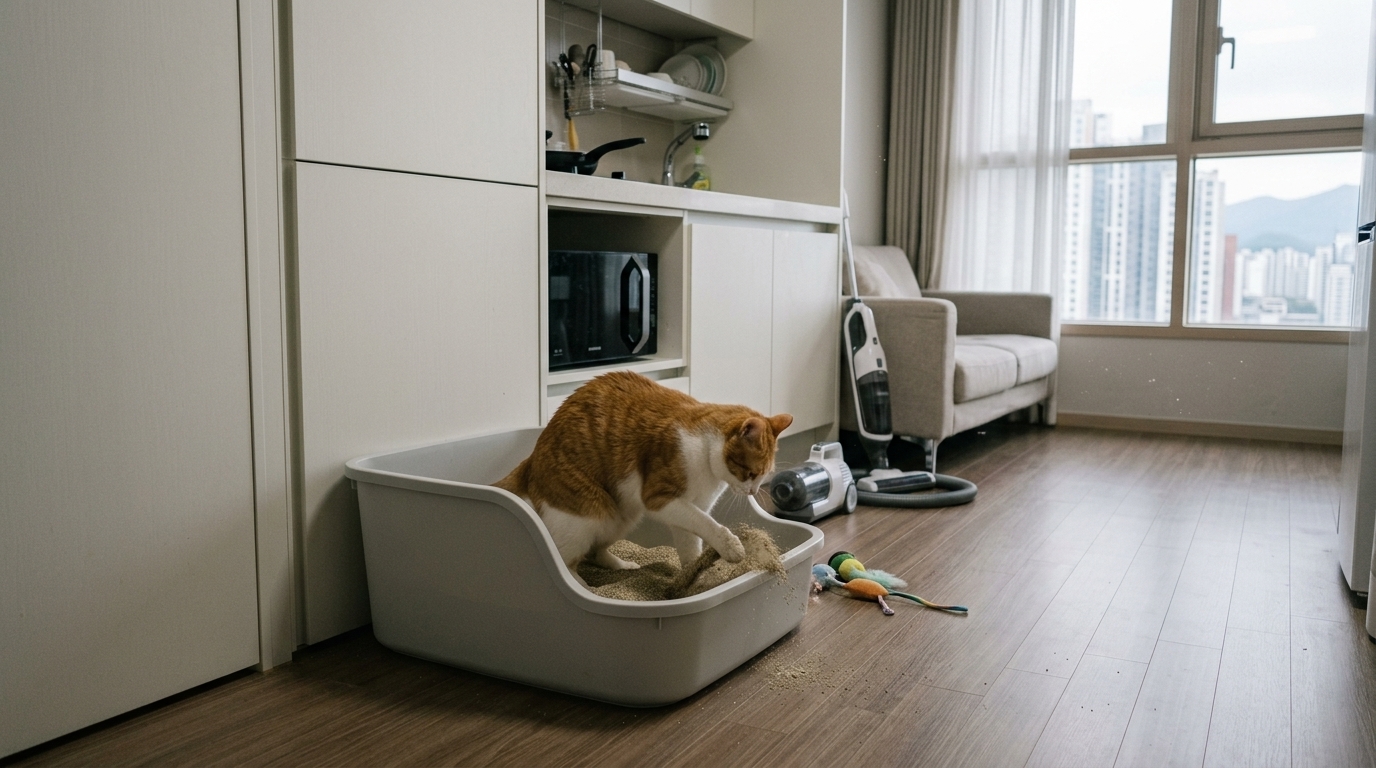
If stress is the primary cause of FIC, the first place pet parents should check is the cat’s litter box. Since cats are in their most vulnerable state when eliminating in the wild, they are extremely sensitive to their bathroom environment. In many indoor housing environments, litter boxes are often placed in cramped or noisy areas like utility rooms, basements, or near washing machines. The sound of a washing machine’s spin cycle or sudden noises from a water heater are critical stress factors for cats.

The litter box should be located in a quiet, open, and low-traffic area. The type of litter is equally important. Bentonite clay litter is highly preferred by cats because it provides a texture most similar to natural sand or soil in the wild. Artificial scents or large particles found in tofu or crystal litters can cause discomfort to a cat’s paw pads, discouraging litter box use and exacerbating cystitis. Maintaining cleanliness by scooping urine clumps and feces at least twice a day is strictly necessary.
Tips to Increase Cat Water Intake: Wet Food, Water Fountains, and Hydration
The core of managing FIC is diluting the concentration of the urine. When urine is diluted, the concentration of chemicals irritating the bladder wall decreases, significantly reducing inflammation and pain. However, cats, being originally desert-dwelling animals, instinctively have a low thirst drive, resulting in severely inadequate voluntary water intake.

Dietary changes are the most effective way to increase a cat’s water intake. Transition from a dry kibble-based diet to wet food, which contains 70-80% moisture. You must also diversify the types and locations of water bowls. Since cats instinctively perceive water placed next to their food as contaminated, position water bowls in various locations along their daily pathways, far away from both food bowls and litter boxes. Installing a cat-specific water fountain is an excellent alternative, considering their natural preference for running water.
Multi-Cat Households: Easing Introduction Stress and Securing Vertical Space
Multi-cat households have a significantly higher incidence rate of FIC. When multiple cats live together in a confined indoor space, invisible hierarchy battles and competition for resources (water, litter boxes, resting areas) often occur, even if things look peaceful on the surface. If there aren’t enough litter boxes, a lower-ranking cat will hold in their urine, directly leading to cystitis.

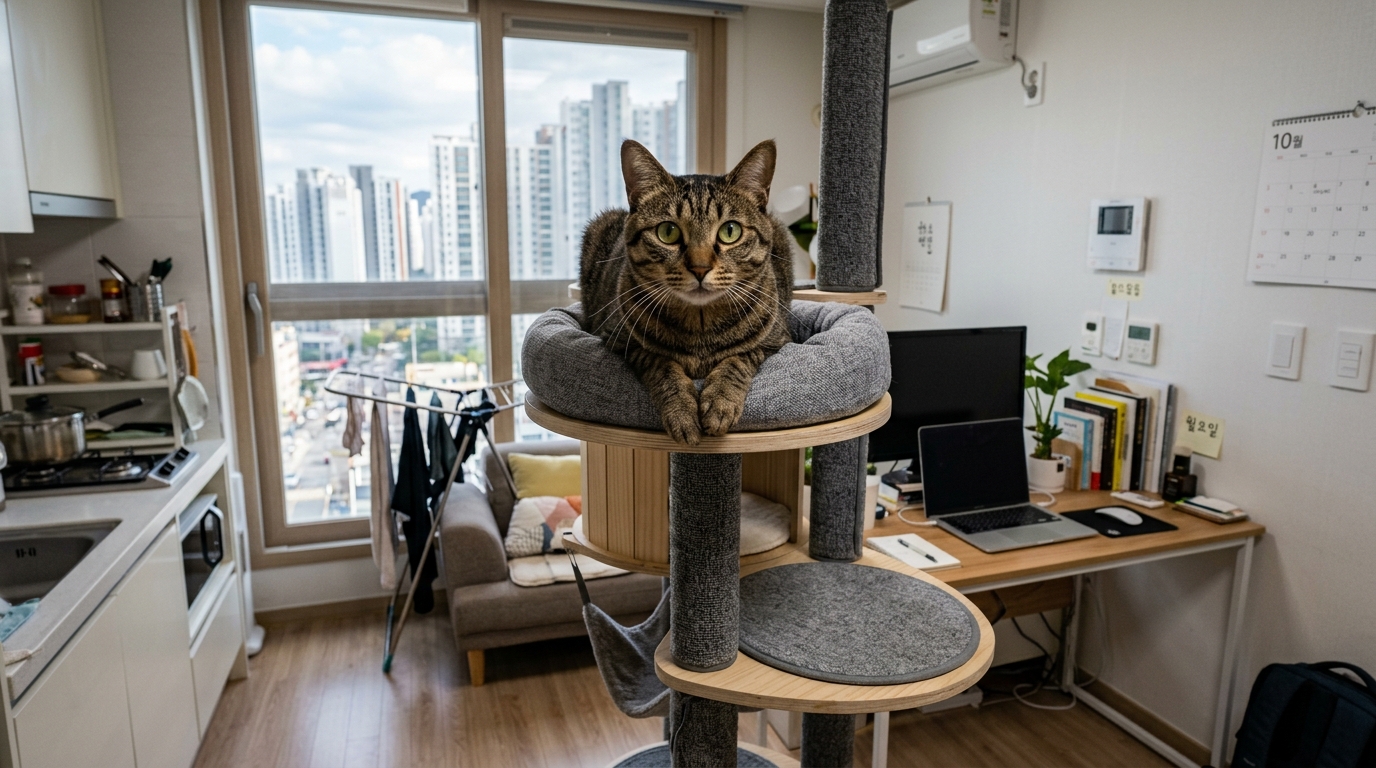
In a multi-cat household, you must distribute “number of cats + 1” litter boxes throughout the house. Furthermore, cats gain a sense of security from vertical space rather than just horizontal floor area. You should create an environment with plenty of ceiling-high cat trees, cat poles, and wall-mounted catwalks so each cat can secure their own safe territory without having to cross paths with others.
Cat Cystitis Medication, Painkillers, Antidepressants, and Supplements
Immediate veterinary intervention is required if your cat exhibits hematuria and pain during urination. Initially, under a veterinarian’s diagnosis, anti-inflammatory painkillers or antispasmodics are prescribed to alleviate pain. For cats with chronic relapses, antidepressants or anti-anxiety medications may be used to lower their stress threshold.

Medical Caution: Symptoms of urinary tract diseases, including FIC, can appear identical to those of urinary stones or bacterial infections, so please do not make a judgment on your own at home. Consult a veterinarian for an accurate diagnosis. To prevent recurrence, it is also helpful to use supplements containing glycosaminoglycans to protect the bladder mucosa, or stress-relieving aids like Lactium (L-theanine) and Feliway (synthetic pheromones), strictly under veterinary guidance.
Urethral Obstruction in Male Cats: Emergency Surgery and 24-Hour Vet Hospital Criteria
The most fatal and critical complication of FIC is a “urethral obstruction.” Male cats, in particular, have an anatomical structure where the urethra is narrower, longer, and more curved compared to females. If inflammatory debris, blood clots, or protein plugs detached from the bladder wall completely block this narrow urethra, urine cannot be excreted at all.

This goes beyond simple pain; it is a hyper-acute, life-threatening emergency. If urine stagnates in the body, it can cause acute renal failure, hyperkalemia, and uremia within 24 hours, potentially leading to cardiac arrest. If a male cat continues to strain in the litter box but no urine comes out, or if he shows lethargy accompanied by vomiting, you must immediately visit a 24-hour veterinary emergency room for a urethral unblocking procedure.
Recommended Research Data 🕸️
Why Is Your Cat Frequently Visiting the Litter Box: A Simple Habit or a Sign of Illness?

Causes of Pink Hematuria in Cats and Emergency Treatment for Cystitis
Moving House and Sudden Cat Cystitis? Lead Researcher Ansim-i’s Detailed Report on Causes and Solutions
Comments (0)
No comments yet. Be the first to leave one!