

Causes of Pink Hematuria in Cats and Emergency Treatment for Cystitis
Magentalab Research Team
July 24, 2026

Hello, pet parents. I am Ansim, the Senior Researcher at Magentalab Pet Research Institute. I know how startled you must have been to suddenly discover a red tint while scooping clumps from the litter box. A cat’s hematuria (blood in the urine) is never a simple mistake or a temporary phenomenon; it is a powerful warning sign of physical and psychological distress. Grounded in veterinary facts, I will clearly explain the causes of feline hematuria and how to respond effectively.

| Urinary Hematuria Risk Level | Clinical Signs Observed by Pet Parents | Internal Medical Mechanism of the Bladder and Urinary Tract | Senior Researcher Ansim’s Emergency Care Guide |
| Acute Feline Idiopathic Cystitis (FIC) (Caution Stage) | Light pink urine, periuria (urinating in unusual places) | Damage to the bladder wall’s mucosal layer (GAG) due to extreme stress, capillary rupture and congestion | Maintain items with familiar scents, secure vertical spaces, and use synthetic pheromones |
| Chronic Urolithiasis (Warning Stage) | Distinct bright red blood mixed in urine, crouching and groaning while urinating | Weather and mineral crystals like struvite physically damage the bladder’s epithelial cells | [Diet Change] Completely stop dry kibble and feed predominantly moisture-rich wet canned food |
| Urethral Obstruction & Uremia (Super Emergency Stage) | Unable to pass any urine for over 12 hours, vomiting, systemic collapse/shock | Mucus plugs and sludge completely block the urethra (Extreme risk in male cats) | [Super Emergency] Fatal condition causing cardiac arrest within 24–48 hours. Visit a night emergency room immediately upon discovery |
1. 3 Core Causes of Feline Hematuria
The mucous membrane inside a cat’s bladder is highly sensitive and can be damaged by various environmental factors. The three main causes of hematuria are:
-
① Feline Idiopathic Cystitis (FIC)
This is the most common cause, accounting for about 60–70% of Feline Lower Urinary Tract Disease (FLUTD) cases. It occurs without a bacterial infection, and the primary trigger is “extreme stress.” When a cat experiences stress from environmental changes, the brain’s sympathetic nervous system becomes overactive, which damages the glycosaminoglycan (GAG) layer protecting the bladder wall. As urine waste directly touches the thinned mucosal layer, neurogenic inflammation occurs, and inner capillaries rupture, causing blood to mix with the urine.

-
② Urolithiasis
This disease occurs when crystals like Struvite or Calcium Oxalate form inside the bladder or urinary tract, causing physical wounds. The sharp stone crystals scrape against the transitional epithelium of the bladder, causing continuous bleeding and pain, which leads to visible bright red hematuria.
-
③ Bacterial Cystitis
External bacteria invade through the urethra, causing inflammation in the inner wall of the bladder. While relatively rare in cats, it easily occurs when the daily water intake is extremely low, causing the urine to become overly concentrated, or when the immune system is weakened. Toxins released by bacteria and the body’s immune response cause inflammatory congestion and internal bleeding in the bladder wall.
2. Distinguishing Between Normal vs. Danger Signs of Hematuria
When assessing your cat’s urine for abnormalities, there is an absolute fact you must remember first.

✅ “Normal” hematuria absolutely does not exist.
In veterinary medicine, there is no such thing as “normal hematuria” for cats. If you observe even the slightest hint of red in the urine, it means damage and bleeding are already progressing somewhere in the bladder or urinary tract. Taking a “wait-and-see” approach for a few days can fatally worsen the disease, so you must intervene immediately.
⚠️ List of Danger Signs Requiring Immediate Intervention
-
Sudden change in urine color: Light pink urine, dark cola-colored urine, or bright red blood stains around the litter clumps.
-
Dysuria (Painful Urination): Crouching the back and body while screaming or groaning in the litter box.
-
Pollakiuria (Frequent Urination): Constantly going in and out of the litter box, passing only tiny drops of urine at a time.
-
Periuria (Inappropriate Urination): Urinating in unfamiliar places outside the litter box, such as on blankets, floors, beds, or clothes.
3. Immediate Home Care Guide for Urgent Pet Parents
If you confirm hematuria, you must instantly implement the following three rules at home to minimize bladder damage before receiving professional medical treatment.

-
① Provide Sufficient Hydration (Forcefully Secure Water Intake)
You must maximize water intake to quickly flush out sludge, bacteria, and stone-forming substances from the bladder. If your cat is on a dry kibble diet, immediately switch to moisture-rich wet canned food and add lukewarm water. Induce voluntary drinking by placing multiple clean water bowls and water fountains throughout the house.
-
② Block Stress Triggers and Stabilize the Environment
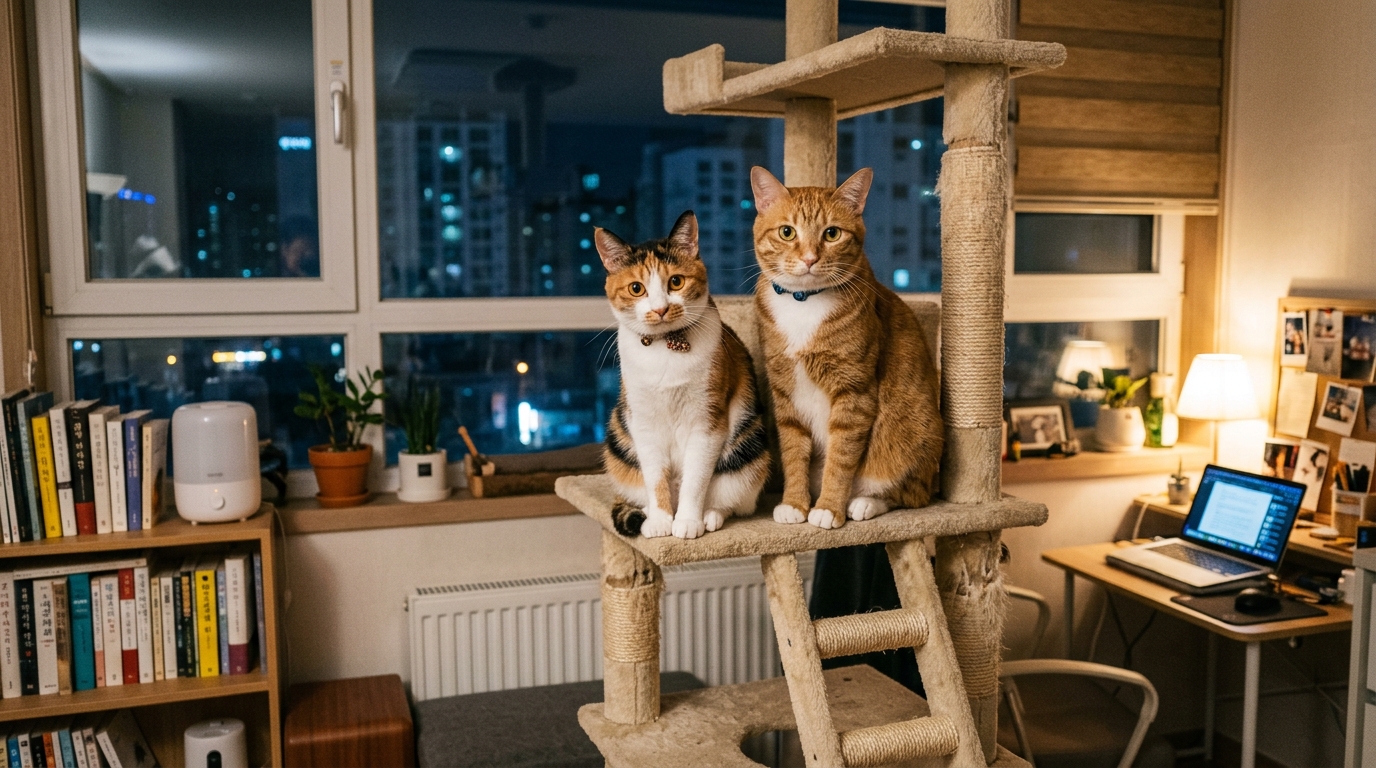
Multimodal Environmental Modification (MEMO) is essential for the treatment and prevention of FIC. Keep the golden rule of having “Number of cats + 1” litter boxes, and place them in quiet, easily accessible, and independent locations. In a multi-cat household, analyze potential territorial conflicts and provide psychological stability by adding vertical spaces (cat trees, cat poles).
-
③ Precisely Record Urine Status and Urination Behavior
Every time your cat uses the litter box, take photos or videos to meticulously record the urine color, the diameter of the clumps, the frequency of urination, and whether they vocalize while urinating. This serves as a crucial clue for the veterinarian to diagnose the progression and severity of the disease and to plan fluid therapy and transfusions.

4. 🚨 Rush to the Vet Clinic Without Delay in These Cases!
Especially if you are raising a “male cat,” you must check for urethral obstruction minute by minute. Male cats have much longer and narrower urethras than females, making them highly susceptible to complete blockage by stone sludge or mucus plugs.
If your cat strains intensely in the litter box but fails to pass a single drop of urine, or if they exhibit vomiting and rapid lethargy, this is a super-emergency situation that can lead to Uremia, resulting in death within 24 to 48 hours. Please visit a night emergency room immediately upon discovery.
Recommended Research Data 🕸️

Dog Reverse Sneezing vs. Collapsed Trachea: Causes and How to Tell the Difference

Canine Hypothyroidism: Causes and Solutions for Weight Gain and “Rat Tail” Hair Loss Despite Eating Less
Urinary Mistakes: Simple Inflammation or Stress? The Difference Between Idiopathic and Bacterial Cystitis
Comments (0)
No comments yet. Be the first to leave one!