

Moving House and Sudden Cat Cystitis? Lead Researcher Ansim-i’s Detailed Report on Causes and Solutions
Magentalab Research Team
July 26, 2026
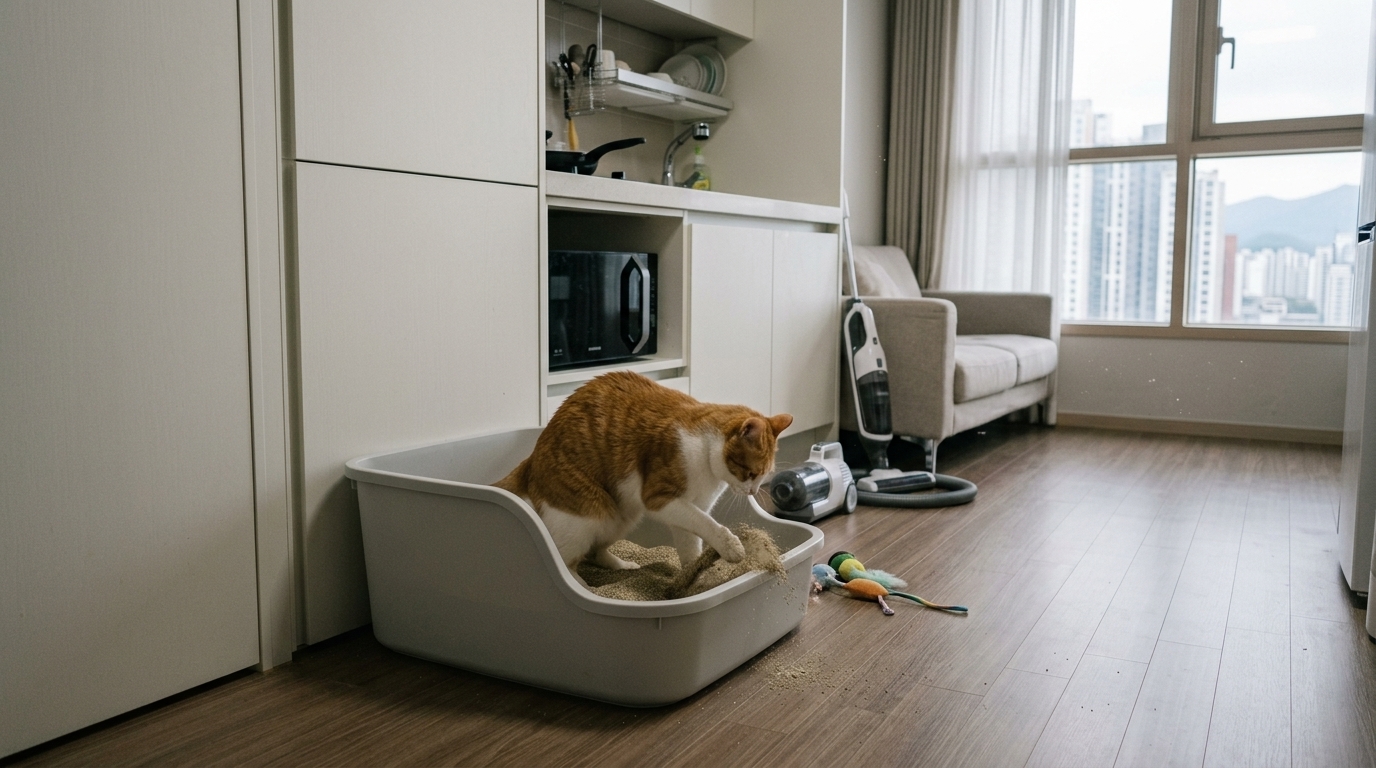
Hello, pet parents! I am Dachshund Ansim-i, the Lead Researcher at the Magentalab Pet Behavior Institute!
Moving to a new home is very exciting, but for our territorial feline friends, it can be an earth-shattering event. You must have been very shocked to see your cat suddenly frequenting the litter box or showing signs of pain after a move. Today, I, Ansim-i, will use my sharp magnifying glass to clearly and accurately analyze the causes, prevention, and solutions for the uninvited guest that visits cats after moving: Feline Idiopathic Cystitis (FIC)!

| Cat Bladder State Grade | Major Clinical & Behavioral Signs | Veterinary Causal Mechanism | Researcher Ansim-i’s Urgent Environmental Prescription (MEMO) |
| Normal Alert Response (Safe Stage) | Hiding under the bed or in corners for 2-3 days after moving; exploring with a low posture. | Temporary anxiety due to loss of territory and the process of rebuilding a safe zone. | Do not force them out; maintain a physical barrier and wait until they come out on their own. |
| Acute Idiopathic Cystitis (Caution Stage) | Abnormally increased visits to the litter box; excessive licking of the lower abdomen. | Damage to the glycosaminoglycan (GAG) mucosal layer of the bladder wall due to stress, inducing sterile inflammation. | Immediately place blankets, litter, and scratchers that have their familiar scent from the previous territory. |
| Urethral Obstruction Stage (Super Emergency Stage) | Unable to urinate but dribbling; red hematuria (pink clumps in the litter) and screaming during urination. | Urethral blockage due to destroyed cellular debris (extremely dangerous, especially for male cats). | [Super Emergency] Induces acute renal failure shock within 24-48 hours. Visit an overnight veterinary emergency room immediately. |
Why Does Cat Cystitis Suddenly Occur After Moving? (The Nature of FIC)
A cat’s cystitis is very different in nature from human urinary tract infections. The vast majority of Feline Lower Urinary Tract Disease (FLUTD) cases are actually “Feline Idiopathic Cystitis (FIC).” Here, “idiopathic” means that the condition occurs without a specific causative bacteria or urinary stones.
A Culprit Scarier Than Bacteria: ‘Environmental Change Stress’
Cats are animals that feel a strong sense of safety within a “territory” marked by their own scent. However, when you move, their familiar territory disappears overnight. As they are exposed to a strange environment, the cat’s brain secretes extreme levels of stress hormones. This stress directly damages the glycosaminoglycan (GAG) mucosal layer that protects the bladder wall, inducing a sterile inflammation on the inner lining of the bladder.
The 4 Major Elements of a New Home That Make Cats Anxious
-
Changes in Furniture Layout: If familiar pathways and the locations of high places (like cat trees) change, cats feel they have lost control over their space.
-
Unfamiliar Scents: The unique smell of new wallpaper, paint, or the body odor of previous residents stimulates a cat’s highly sensitive sense of smell.
-
New Pets: The presence of new animals encountered outside the window or in the unfamiliar surroundings post-move is perceived as a threat.
-
Noise and Vibration: The loud noises of moving luggage and the disorganized clutter maximize their anxiety.
Normal Adaptation Response vs. Danger Signals Requiring Immediate Treatment
When a cat shows unusual behavior after moving, you must clearly distinguish whether this is a simple adaptation process or a signal that they are physically sick.

Normal Behavior You Don’t Need to Worry About (A Few Days of Vigilance and Hiding)
For 2 to 3 days immediately after arriving at a new house, hiding in corners or under the bed and exploring the house with a lowered tail while sniffing are perfectly normal exploration processes. At this time, it is safe to give your cat time to find peace on their own rather than forcing them out.
Danger Signals Requiring Immediate Action (Urinary Abnormalities and Decreased Appetite)
If your cat has passed the initial adaptation period but still shows the following symptoms, you should suspect urinary tract diseases, including cystitis, and immediately seek a veterinarian’s diagnosis.
-
Stranguria and Pollakiuria: Going to the litter box too frequently, or digging in the litter without being able to pass urine.
-
Excessive Lower Abdomen Grooming: Obsessively licking the lower abdomen or genital area to the point of hair loss in an attempt to reduce pain.
-
Sudden Drop in Appetite and Vitality: Refusing to eat at all, rejecting favorite treats, and lying down lethargically.

The 3-Step Solution to Reduce Moving Stress and Prevent Cystitis
Your small considerations and environmental adjustments are the biggest keys to protecting your cat’s bladder health!
Step 1: Keep Existing Items with Familiar Scents
Just because you moved doesn’t mean you should replace all of your cat’s supplies with new ones at once! Please place their used litter box, litter, scratchers, cushions, and blankets in the new house without washing them. Items carrying their familiar body scent provide great comfort to cats.

Step 2: Create a Safe Fortress and Hiding Space
Rather than opening up the entire house at once, designate the master bedroom or a small room as the “cat-exclusive room.” Provide boxes, a carrier, or a cat tree where the cat can hide within that space, and place their food, water, and litter box close by. It is best to first narrow the boundary so they can feel safe.
Step 3: Utilize Cat-Specific Pheromone Products
Try using diffusers or sprays like ‘Feliway,’ which replicate the facial pheromones secreted from a cat’s cheeks, throughout the new house. This continuously sends a signal to the cat saying, “This is a safe place,” which greatly relieves stress.

[🚨Self-Diagnosis] When to Go to the Vet Without Hesitation!
Especially for male cats, if “urethral obstruction” occurs due to cystitis and the urethra becomes blocked, it can be life-threatening within 24 to 48 hours due to acute renal failure or uremia. If you notice even one of the symptoms below, please visit an overnight emergency room or veterinary clinic immediately!
| Red Alert Symptom | Detailed Condition Description |
| 🚨 Increased Urination Frequency (Pollakiuria) | Frequenting the litter box dozens of times, passing very little urine, or dribbling. |
| 🚨 Hematuria (Red Urine) | The color of the litter clumps is pink, or there is visible red blood mixed in. |
| 🚨 Litter Box Accidents & Dysuria | Urinating in unfamiliar places like blankets, clothes, or the floor, or screaming while urinating. |

Lead Researcher Ansim-i’s YMYL Fact Check Report
[Ansim-i’s Fact Check]
“Cat cystitis caused by bacterial infection is very rare, occurring in only about 2~10% of young cats under 10 years old. Because the vast majority of cases are Feline Idiopathic Cystitis (FIC) caused by stress, rather than reckless antibiotic abuse, the most scientific and effective veterinary treatment is MEMO (Multimodal Environmental Modification), which immediately removes stress factors and increases water intake.”
If you can just understand the heart of your anxious cat a little more after moving, cystitis can be easily prevented and overcome. This has been Lead Researcher Ansim-i from the Magentalab Pet Behavior Institute! If you have any questions, please look for me anytime!
Recommended Research Data 🕸️
Urinary Mistakes: Simple Inflammation or Stress? The Difference Between Idiopathic and Bacterial Cystitis

Newborn Kitten Refusing to Nurse and Body Temperature Drop: Golden Time Emergency Response for Fading Kitten Syndrome and Hypoglycemic Shock
Why Is Your Cat Frequently Visiting the Litter Box: A Simple Habit or a Sign of Illness?
Comments (0)
No comments yet. Be the first to leave one!