
Causes of Foul-Smelling Brown Dog Ear Wax: Malassezia Yeast Overgrowth and Ear Cleaner Application Guide
Magentalab Research Team
July 16, 2026
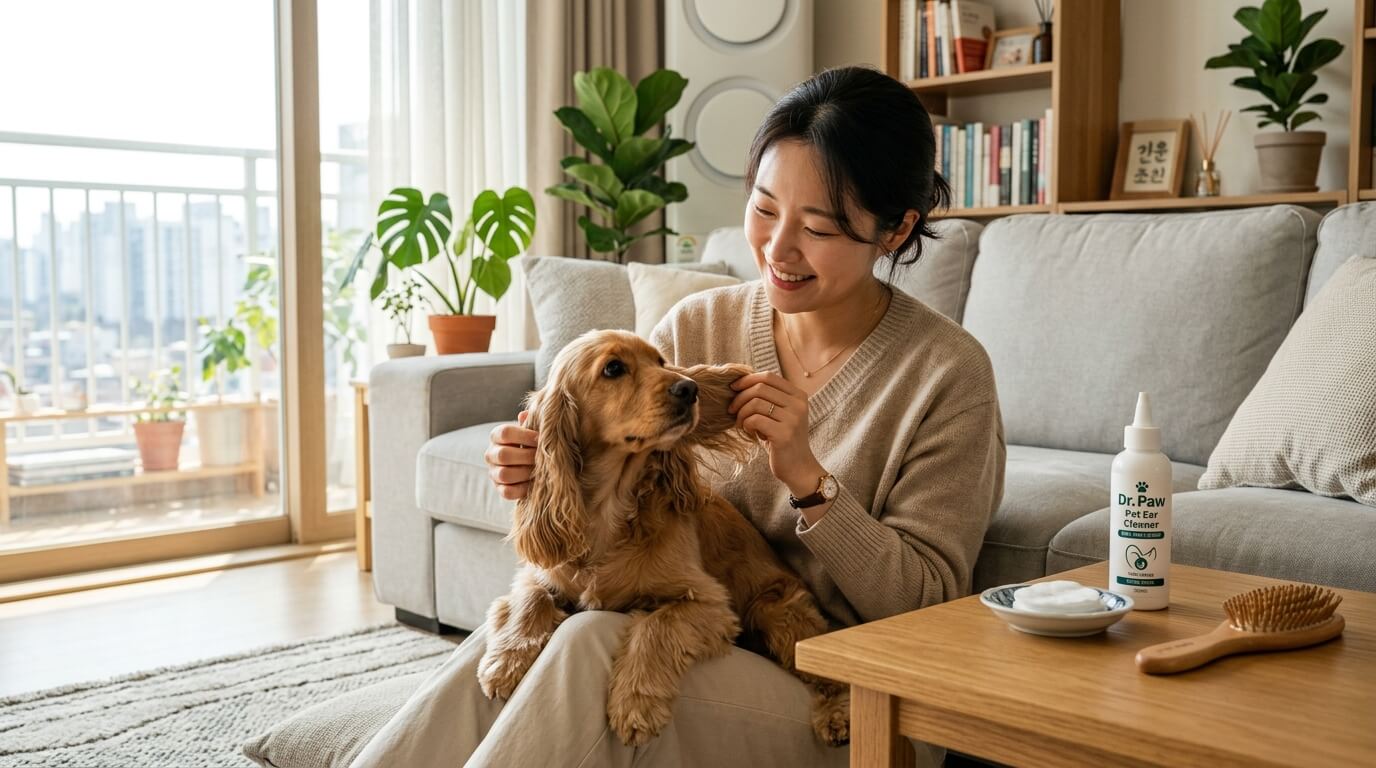
Hello! I’m Dachshund Ansim-i, Chief Researcher at the Magentalab Pet Research Institute! Today, I’ve brought another highly informative research report to ensure a happy and healthy life journey for you and your dog.
When a dog’s ear starts to give off a musty odor or produce brown ear wax, it becomes a chronic headache for many pet parents. Especially for breeds with pendulous (floppy) ears like Poodles and Cocker Spaniels, otitis externa (outer ear infection) is a notorious, recurring condition regardless of the season. The brown ear wax and foul odor in a dog’s ear are more than just a cleanliness issue; they are a strong clinical signal pointing to an explosive, abnormal overgrowth of Malassezia, a resident yeast on the skin. If left untreated, this can lead to eardrum damage or chronic stenosis (narrowing) of the ear canal. Therefore, pet parents must understand the exact physiological mechanisms and learn how to safely clean their dog’s ears.
| Analysis Item | Core Veterinary Science | Key Management Points for Pet Parents |
| Causative Pathogen | Malassezia pachydermatis (Lipophilic resident yeast) | Explodes in growth during immunosuppression, allergies, or high humidity, causing secondary infections. |
| Brown Ear Wax & Odor Mechanism | Lipase secreted by the yeast breaks down sebum into free fatty acids. | Free fatty acids irritate the ear canal epithelium, causing inflammation, itching, sticky brown discharge, and a sour cheese smell. |
| At-Risk Breeds & Anatomy | Poodles, Cocker Spaniels, Retrievers (breeds with pendulous ears), L-shaped ear canal structure. | Lack of ventilation creates a hot and humid ear canal environment. |
| Clinical Risks of Cotton Swabs | Causes physical micro-abrasions to the epithelial migration layer of the outer ear canal. | Pushes earwax deep against the eardrum, causing cerumen impaction and promoting secondary bacterial infections. |
| Correct Veterinary Cleaning Method | Instill cleaner -> Massage ear base -> Induce self-shaking -> Wipe outer ear gently. | Ban cotton swabs; clean gently 1-2 times a week with a dedicated pet ear cleaner to prevent recurrence. |
1. Physiological Characteristics of Malassezia pachydermatis Causing Brown Wax and Odor
Malassezia pachydermatis is a harmless lipophilic yeast (a type of fungus that loves fat) naturally residing on the surface of a dog’s normal ear canal and skin. Because it cannot synthesize its own lipids, it relies on the sebum secreted by the host’s skin as its primary nutrient source.

Under normal immune conditions with a healthy skin barrier, beneficial bacteria and immune cells keep the Malassezia population strictly controlled. However, this balance breaks down when the skin barrier weakens or sebum production spikes due to food allergies, atopic dermatitis, or hormonal imbalances. In this nutrient-rich environment, Malassezia rapidly multiplies through explosive asexual reproduction. As they proliferate, the yeast secretes an enzyme called lipase, which breaks down sebum into free fatty acids. These fatty acids chemically irritate the delicate epithelial cell layer of the ear canal, causing chronic otitis externa, intense itching, copious amounts of dark brown, sticky ear wax, and a distinct rancid cheese or sour smell.
2. Anatomical Reasons Poodles and Cocker Spaniels Suffer from Recurring Otitis Externa
Unlike the simple horizontal ear canal of humans, dogs have an “L-shaped” ear canal where the vertical canal and horizontal canal meet at a sharp angle. Anatomically, this makes it very difficult for debris to naturally exit once trapped and prevents deep moisture from evaporating.

Breeds with long, pendulous ears (like Poodles, Cocker Spaniels, and Golden Retrievers) have their ear canal openings completely covered by the ear flap (pinna). This lack of ventilation traps air inside, keeping the internal temperature and humidity consistently high. Furthermore, breeds like Poodles grow thick hair inside their ear canals, physically blocking the exit pathway for wax and debris. This anatomical vulnerability turns the ear canal into a perfect, natural greenhouse for yeast and bacteria to thrive, creating a vicious cycle of chronic recurrence no matter how frequently pet parents try to clean it.
3. The Mechanism of Explosive Malassezia Growth Due to Rising Temperature and Humidity
When the temperature inside the ear rises and humidity stagnates, the physical integrity of the skin barrier weakens, and the activity level of Malassezia skyrockets. Here is a step-by-step breakdown of this physiological mechanism:

| Stage | Phenomenon | Detailed Physiological Mechanism | Clinical Result |
| Stage 1: Environmental Change | Ear canal sealing and temp/humidity rise | Pendulous ears block airflow, causing internal temperature (over 101.3°F/38.5°C) and relative humidity to spike. | Creates an optimal incubation environment for yeast proliferation. |
| Stage 2: Lipid Excess | Sebaceous gland activation | High heat, humidity, and pro-inflammatory signals cause an explosive secretion from apocrine and sebaceous glands. | Over-supplies Malassezia with its primary nutrient (lipids). |
| Stage 3: Yeast Proliferation | Malassezia population explosion | Fueled by abundant lipids, the yeast multiplies exponentially via budding. | Massive release of the yeast metabolite, Lipase. |
| Stage 4: Chemical Irritation | Free fatty acid creation and tissue irritation | Lipase breaks down sebum, generating massive amounts of irritating free fatty acids. | Promotes chemical micro-inflammation of the ear canal epithelium. |
| Stage 5: Pathological Manifestation | Exudate formation and foul odor | Immune response accelerates skin cell shedding; lipids, hyphae, and dead cells clump to form brown wax. | Severe itching and a sour cheese-like chemical odor develop. |
Because even a microscopic imbalance in temperature and humidity sets off this chain reaction leading to chronic otitis externa, the fundamental solution lies in moisture control and proper anatomical hygiene.
4. Why Cotton Swabs are a Veterinary Hazard: Preventing Eardrum and Canal Damage
Many pet parents naturally reach for a cotton swab (Q-tip) to scoop out the brown ear wax visible inside their dog’s ear. However, from a clinical veterinary perspective, inserting a cotton swab is one of the worst possible practices and will rapidly deteriorate your dog’s ear health.

The epithelial cell layer lining a dog’s ear canal has a natural “epithelial migration” ability, acting like a slow conveyor belt to naturally push ear wax outward. Inserting a rigid cotton swab directly disrupts this, shoving the wax that was trying to exit deep back against the tympanic membrane (eardrum), leading to a severely compacted blockage known as cerumen impaction.

Additionally, if a dog flinches or shakes their head during cleaning, the hard stick of the swab can easily scratch the thin skin of the ear canal, causing micro-abrasions. In severe cases, it can directly perforate the eardrum, leading to permanent hearing loss or damage to the auditory ossicles. The damaged epidermis loses its protective barrier, becoming a breeding ground not only for Malassezia but also for fatal secondary bacterial infections like Pseudomonas. Therefore, cotton swabs must never enter the ear canal and should strictly be limited to gently wiping away visible debris on the outer ear flap.
5. The Correct Ear-Cleaning Method to Safely Eliminate Dog Ear Odor
To prevent recurring Malassezia and chronic otitis externa, you must use a liquid-flush self-cleaning method that physically dissolves the ear wax. Follow these safe veterinary steps to clean your dog’s ears:

-
Step 1: Select the Right Cleaner & Adjust Temperature
Prepare a vet-recommended, alcohol-free dog ear cleaner containing ceruminolytic (wax-dissolving) ingredients. If you instill cold liquid, the sudden temperature change can stimulate the vestibular system, causing severe dizziness and frantic head shaking. Warm the bottle in your hands to lukewarm body temperature before use.
-
Step 2: Direct Instillation into the Ear Canal
Gently pull your dog’s ear flap upwards to straighten the L-shaped canal as much as possible. Carefully place the tip of the ear cleaner bottle at the opening of the canal and squeeze a generous amount (usually 5–10 drops) until the liquid is just visible at the top. Do not skimp on the solution.
-
Step 3: Massage the Cartilage at the Base of the Ear
With the liquid inside, gently grasp the firm cartilage at the base of the ear (below the ear opening) and massage it softly for 10–15 seconds until you hear a squishy sound. This process allows the solution to dissolve the sticky brown wax and Malassezia hyphae, separating them from the canal walls.
-
Step 4: Induce Natural Head Shaking
When you let go, your dog’s natural instinct will be to shake their head vigorously from side to side. The centrifugal force generated will naturally expel the dissolved wax and liquid up and out of the vertical canal. Do not stop them from shaking; let them shake freely.
-
Step 5: Gently Wipe Away Outer Residue
Use a soft cotton pad or sterile gauze to gently wipe away the expelled wax and remaining liquid from the inner surface of the ear flap (pinna). After cleaning, flip the ears back or tie them up temporarily (for pendulous breeds) to ventilate the canal and allow any remaining moisture to air dry completely.
For general preventive care, cleaning 1-2 times a week is sufficient. However, if the ear is already severely inflamed, painful, or if the integrity of the eardrum is unknown, you must visit a veterinary clinic for an otoscopic examination and follow your vet’s prescribed treatment plan.
Recommended Research Data 🕸️
Differences Between Dog Food Regurgitation and Acid Vomiting, and DM Ingredient Comparison for Gastrointestinal Irritating Foods

Dog Panting and Drooling Causes: How to Differentiate Between Simple Heat, Chronic Pain, and Respiratory Distress
The Causes of Feline Ear Tip Hair Loss and Flaking: Ringworm (Dermatophytosis) Contagion and Wood’s Lamp Examination
Comments (0)
No comments yet. Be the first to leave one!