
Differences Between Dog Food Regurgitation and Acid Vomiting, and DM Ingredient Comparison for Gastrointestinal Irritating Foods
Magentalab Research Team
July 15, 2026
Hello! I’m Ansim, a Dachshund and the Chief Researcher at the Magentalab Pet Research Institute. Today, I am here to provide you with another informative veterinary research report to ensure a happy and healthy journey with your furry best friend.
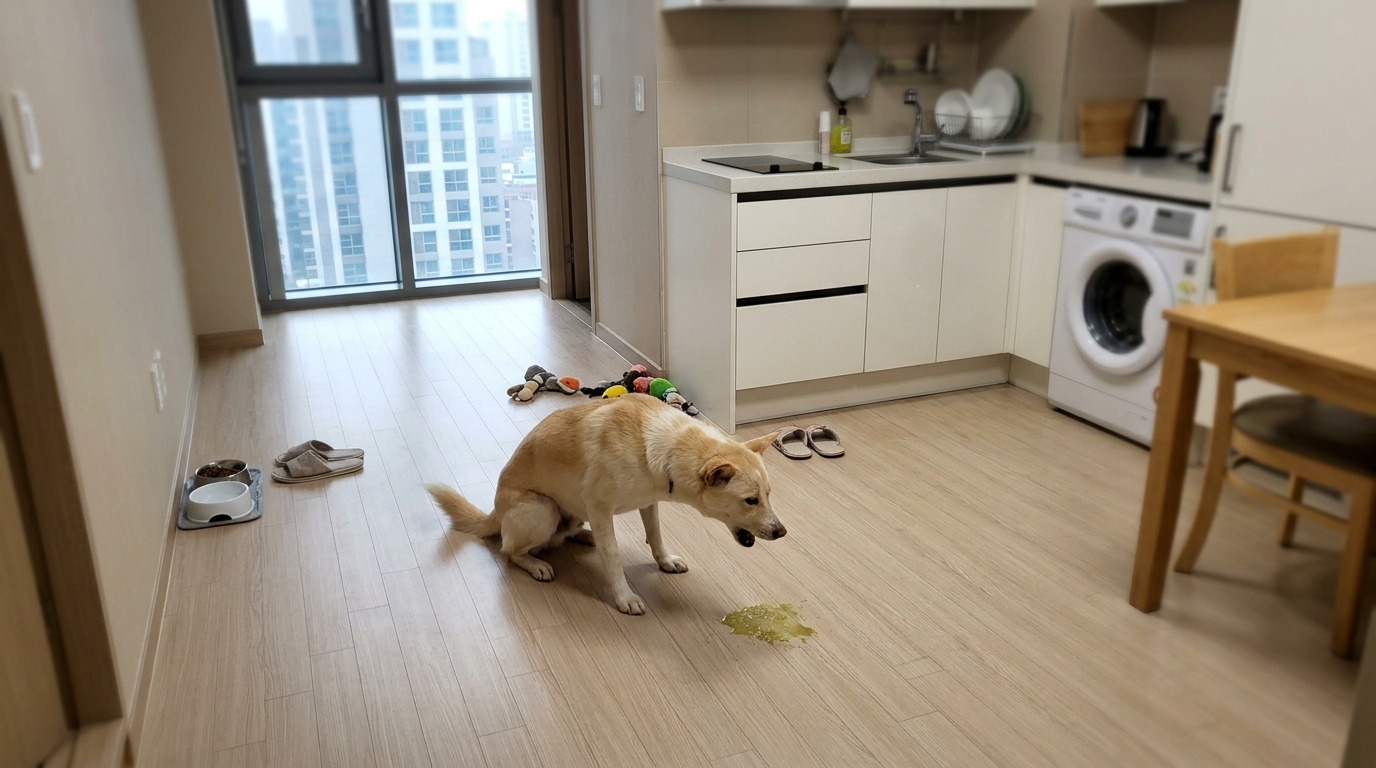
When a dog immediately spits out unchewed kibble right after eating or throws up yellow gastric juice, pet parents naturally feel a heavy chest and deep concern. However, “Regurgitation”—where food is expelled in its original form before being fully digested—and “Vomiting”—where food undergoes partial digestion and mixes with gastric acid—are anatomical and physiological responses with completely different underlying mechanisms and prognoses. Today, I will explain in detail how to clinically distinguish between these two phenomena and how to screen for low-quality dog food ingredients that induce gastrointestinal reflux.
| GI Reflux Disorder Stage | Actual Physical/Behavioral Signs Pet Parents Should Notice | Internal Medical & Physiological Mechanism | Researcher Ansim’s Correct Veterinary Management |
| Stage 1: Esophageal Regurgitation | Expels food in a cylindrical/tube shape immediately after eating, without any retching or nausea. | Decreased lower esophageal peristalsis and esophageal pressure reflux due to Megaesophagus. | Bending down to eat causes gravity-induced reflux. Use elevated feeders set to shoulder height with a 15-degree tilt. |
| Stage 2: Gastrointestinal Vomiting | Drooling, pacing anxiously, heaving diaphragm, and expelling sour-smelling gastric acid. | Active abdominal muscle contraction reflex triggered by the brain’s vomiting center and GI mucosal irritation. | Stop feeding dry kibble high in crude ash and poor starch. Switch to a highly fluid wet diet reconstituted in lukewarm water (100°F ~ 104°F). |
| Stage 3: GI Paralytic Shock (Poisoning) | Anuria (inability to urinate), hematuria, explosive vomiting, and systemic seizures. | Toxin absorption through a compromised GI barrier, leading to glomerular necrosis and methylxanthine-induced myocardial overload shock. | [⚠️ Emergency] Completely isolate toxins that destroy the gastric mucosa and organs, such as chocolate, onions, xylitol, and grapes. |
1. Anatomical and Clinical Differences Between Immediate Regurgitation and Acidic Vomiting
While both regurgitation and vomiting originate from the digestive tract, their physical mechanisms are entirely different. Regurgitation is a passive phenomenon where undigested food hits the elastic limit of the esophageal muscles and flows backward. Vomiting, on the other hand, is an active reflex triggered by the brain’s vomiting center, accompanied by powerful contractions of the diaphragm and abdominal muscles to expel contents from the stomach and duodenum.

-
Characteristics of Esophageal Regurgitation: There are no prodromal signs like retching or heaving of the abdominal muscles. Within seconds to minutes of eating, the dog expels undigested food exactly as it was swallowed, often in a tube-like shape. If tested, the pH of the expelled contents is alkaline.
-
Characteristics of Gastrointestinal Vomiting: Prodromal signs such as hypersalivation (drooling), lip-smacking, and anxious pacing are highly prominent. The dog heaves its diaphragm significantly, contracting stomach muscles to expel partially digested, sour-smelling food or yellow bile/gastric juice. The pH is acidic.
2. Screening for Poor Quality Ash and Carbohydrates That Induce GERD and Megaesophagus in Dogs
The root causes of frequent regurgitation are often “Megaesophagus”—where lower esophageal peristalsis is blocked or the esophageal diameter abnormally dilates—or “Gastroesophageal Reflux Disease (GERD),” where irritated gastric mucosa causes stomach acid to flow back into the esophagus. In particular, excessive “Crude Ash” added to lower production costs, or poor-quality corn and wheat starch carbohydrates, are the main culprits. When analyzed on a Dry Matter (DM) basis, these ingredients damage the epithelial cells of the digestive tract mucosa and abnormally delay gastric emptying time. Please refer frequently to the comprehensive guide table above.

3. Toxic Mechanisms of Hazardous Foods Causing Acute Organ Paralysis and Poisoning in Dogs with Compromised GI Tracts

When specific toxic substances are introduced to a dog with a damaged gastrointestinal barrier and an electrolyte imbalance from frequent reflux, the rate of toxin absorption through the mucosa spikes. This causes central nervous system paralysis and acute renal failure shock to manifest at a much more fatal speed, making immediate isolation crucial. Please memorize the poisoning comparison scale below to ensure rapid response.
| Hazardous Substance/Food | Primary Toxic Component | Digestive Barrier Breakdown & Neuro/Organ Toxicity Mechanism | Early Clinical Signs of Poisoning | Risk Prevention & Management Tips |
| Chocolate | Theobromine | Inhibits esophageal smooth muscle relaxation, strongly irritates gastric mucosa, and induces arrhythmias and tachycardic shock upon absorption. | Severe vomiting, abdominal pain, hypersalivation, arrhythmias, tremors, seizures. | Store all chocolate baked goods in high cabinets completely out of your dog’s jumping reach. |
| Onions & Garlic | Allyl propyl disulfide | Absorbed through the digestive mucosa, it causes oxidative damage to red blood cell membranes, forming Heinz bodies and inducing systemic hypoxemic anemia. | Hematuria (red urine), pale gingival mucous membranes, chronic lethargy, vomiting. | Completely cover and secure any leftover broths or soups containing onion remnants. |
| Xylitol (Gum, toothpaste) | Xylitol | Upon entering the liver via the digestive tract, it triggers a massive insulin release, depriving the brain of glucose and causing hepatic necrosis. | Severe whole-body tremors, lethargy, ataxia (staggering), shock-induced respiratory arrest. | Never keep candies or gum containing xylitol in handbags accessible to your dog. |
| Grapes & Raisins | Tartaric acid | Permanently destroys the glomerular and tubular epithelial cells of the kidneys, causing electrolyte secretion failure and glomerular shutdown. | Acute vomiting, diarrhea, anuria (inability to urinate), uremic coma. | Never leave raisin baked goods or unpeeled grapes unattended on counters. |

4. Adjusting Bowl Height and Wet Diet Management to Prevent Regurgitation and Vomiting Relapse
Elevating and Tilting Bowls to Prevent Gravity Reflux
For dogs suffering from Megaesophagus or frequent regurgitation, eating with their head lowered to the floor causes the esophagus to bend downward, preventing digested food from entering the stomach and causing it to flow right back out. Please create an environment that utilizes gravity by providing elevated feeders set to your dog’s shoulder height with a 15-degree tilt, allowing food to glide smoothly down the esophagus into the stomach.

Highly Fluid Wet Food and Dietary Fiber Control for Faster Gastric Emptying
Immediately stop feeding dry kibble high in crude ash and poor-quality starches. Completely transition the diet to highly fluid wet food with high moisture content, or gently cooked fresh food soaked in lukewarm water (100°F ~ 104°F). This increases the speed of gastrointestinal transit and emptying, preventing esophageal irritation at the source.

5. Chief Researcher Ansim’s Nutritional and GI Protection Prescription
Frequent regurgitation and vomiting in dogs are not simply a result of eating too fast or being fussy; they are biological SOS signals sent to protect the digestive mucosa from decreased lower esophageal peristalsis and poor food ingredients. The core of preventive medicine lies in adjusting the food bowl height to aid gravity and analyzing DM nutrition with a focus on moisture.
Recommended Research Data 🕸️

The Causes of Feline Ear Tip Hair Loss and Flaking: Ringworm (Dermatophytosis) Contagion and Wood’s Lamp Examination

A Comprehensive Guide to Cat Bad Breath: Causes, the Mechanism of Periodontitis-Induced Systemic Organ Failure, and Dental Scaling Costs
Distinguishing Polydipsia in Senior Dogs and Suspicion of Canine Cushing’s Syndrome (Hyperadrenocorticism)
Comments (0)
No comments yet. Be the first to leave one!