
Causes of Dog Separation Anxiety Howling & Door Stalking, and the 5-Step Crate Training Method
Magentalab Research Team
July 14, 2026
Hello! I am Dachshund Ansim-i, Chief Researcher at the Magentalab Pet Research Institute! Today, I’ve brought another informative research report to help ensure a happy life together for you and your furry friends.
From the moment you step out the door for work or a short errand, the pitiful howling echoing from inside, the sound of claws desperately scratching the door, and the sight of your dog stalking and pacing in front of the entryway absolutely break a pet parent’s heart. Furthermore, returning home to witness shredded living room walls and chewed-up furniture gives pet parents severe psychological stress, often accompanied by fierce complaints from neighbors. A dog’s separation anxiety is not simply a lack of affection; it is a chronic panic state of the cranial nervous system where the pet parent’s absence directly translates into an extreme, death-like fear. Today, we will precisely examine the behavioral pathological mechanisms stimulated by anxiety hormones and the 5-step crate training method to gift your child a sense of security, based on veterinary science.
Table: Pet Parent Mistakes / Environmental Triggers & Corrective Solutions
| Pet Parent’s Behavioral Mistake / Environmental Trigger | Aggravating Factor of Separation Anxiety | Internal Process & Anxiety Induction Mechanism (YMYL) | Acute Physical/Behavioral Symptoms Shown by the Dog | Proper Response & Corrective Behavior Solution |
| Excessive touch & farewells right before leaving | Saying goodbye and aggressively petting | The pet parent’s tense emotions reach the hypothalamus, maximizing the secretion of the stress hormone Cortisol. | Explosive howling, scratching the front door, tucked tail, excessive panting. | Completely ignore the dog and exit calmly like an invisible person starting 15 minutes before leaving. |
| Intense greeting response immediately upon returning | Hugging and shouting the moment you walk in | Suppressed Adrenaline and Dopamine spike sharply, perceiving the “return of the pet parent” as a reward, deepening obsession. | Excitement urination (submissive urination), intensified pacing at the door, limping after jumping. | Withhold praise until the dog calms down completely after you enter the house. |
| Sudden spatial abandonment in an anxious state | Left alone in a large space without a playpen | The compulsive stress of having to guard the territory stimulates the Amygdala, causing oversecretion of forebrain alarm hormones. | Shredding wallpaper, howling, dehydration from drooling, biting their own tail. | Relieve their defensive instinct by limiting their territory to a cozy, roofed crate (den). |
| Fixation on departure preparation signals | Putting on socks, picking up keys, spraying perfume | Specific auditory and visual stimuli trigger a conditioned Anticipatory Anxiety linked to the panic state of “losing the pet parent.” | Whining, jaw trembling, blocking the doorway, hiding in corners (avoidance behavior). | Repeatedly desensitize them by shaking keys without leaving, or watching TV with shoes/socks on. |

1. Behavioral Psychology Analysis of Dog Separation Anxiety Howling and Door Stalking
-
The Developmental Origin of Separation Anxiety: Absence = Survival Threat
Dogs are social animals that live in packs, and they perceive their pet parent as the pack leader and their sole safety net.
If the “independence developmental process,” which they should naturally undergo around 3 to 4 months of age, is lacking due to overly attached overprotection or early weaning, the brain’s Amygdala sounds a severe alarm the moment the pet parent disappears from sight. The Hypothalamic-Pituitary-Adrenal (HPA) Axis activates, oversecreting Cortisol and Adrenaline, pushing the dog into a state of panic where their blood pressure rises and their heart rate explodes.
-
Pathological Signals Hidden in Door Stalking and Destructive Behaviors
When the pet parent closes the door and leaves, the dog senses the loss of their pet parent’s scent through the door gap and begins “door stalking,” unable to leave the entryway. They cry out desperately through “Howling”—a pack-calling signal inherited from their wolf ancestors—to call their pet parent back.
If this call does not work, they exhibit destructive signs (Pica) to relieve the panic-induced pain, such as chewing the doorframe with their teeth or digging into the drywall with their claws. In this process, they bring trauma upon themselves, breaking their claws and causing their gums to bleed.

2. The 5-Step Dog Crate Training Method for Stability
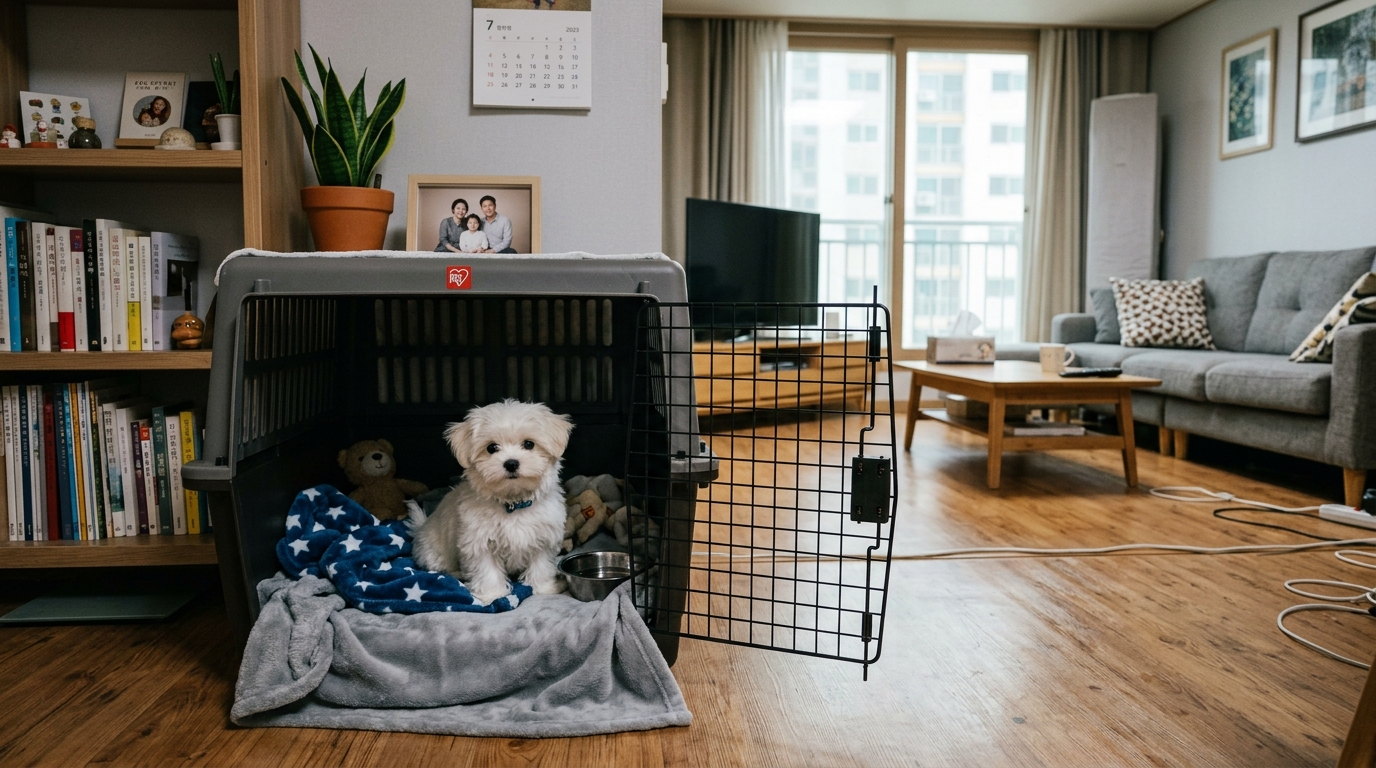
Many pet parents feel resistant to confining their dog in a crate or kennel, viewing it as “abuse or imprisonment.” However, to a dog, a wide-open living room is an overly vast territory they feel compelled to guard, serving as a root of anxiety. A narrow, dark crate with enclosed sides and a roof becomes the ultimate safe haven, mirroring the “Den” where their ancestors lived in the wild.
-
Step 1: Forming a Positive First Encounter (In-House Rewards)
Start by removing the roof of the crate and leaving only the bottom tray. Drop their favorite, most delicious treats or puree on the tray. Whenever they step in voluntarily, give them storm-like praise and a special reward, teaching their brain that the inside of the crate is the “promised land” where delicious rewards appear.
-
Step 2: Adding the Roof and Adapting to the Interior
Once they are adapted to the tray, attach the roof. Throw a toy stuffed with a delicious treat (e.g., a KONG toy filled with frozen peanut butter) deep inside the crate to increase the time they willingly crawl in and chew. When their hindquarters are completely inside, smoothly introduce the keyword “House” in a calm voice.

-
Step 3: Overcoming the Closed-Door Barrier and 1-Second Wait Training
While the dog is inside eating the food, briefly close the crate door and open it immediately after 1 second. Gradually teach them that even if the door closes, the pet parent opens it right away, and no threat occurs. Gently extend the waiting time with the door closed to 3 seconds, 10 seconds, and then 30 seconds.
-
Step 4: Disappearing Desensitization Simulation
With the dog in the crate and the door closed, step into a room or bathroom, disappearing from their sight for 5 seconds before returning. If they whine or bark, never open the door. Catch the moment they are calmly silent for even 1 second, open the door, and provide a treat. In this step, you must implant the strong trust that “Even if my pet parent disappears from my sight, they will definitely return and open the door.”
-
Step 5: Extending Departure Time and Establishing Sleep in the Crate
Extend the training time to 10 minutes, 30 minutes, and 1 hour. Make it a habit for them to sleep independently inside the crate placed next to your bed at night. A dog that has completed crate training can comfortably rest (sleep) safely inside the crate without secreting cortisol, even when the pet parent goes out.

3. Mechanisms of Destructive Behavior and Physical Symptoms Induced by Cortisol Secretion
A state of chronic separation anxiety develops into a systemic disease that collapses the dog’s organ structure and immune system.
-
Mechanism of Oral Mucosa Dryness and Worsening Thirst Due to Chronic Hyperventilation
Dogs terrified by anxiety exhibit Panting, where their respiratory rate explodes from under 30 breaths per minute to over 100. If hyperventilation continues, saliva secretion is suppressed, the oral mucosa dries out completely, and body temperature rises sharply, causing an abnormal expansion of cerebral blood flow.
Because of this, you may observe physiological soiling—such as the dog drinking water ravenously or experiencing an explosive increase in potty accidents while the pet parent is away.
-
Stress-Induced GI Paralysis and Bloody Diarrhea (Colitis)
Chronic stress extremely activates the autonomic nervous system (sympathetic nerve), cutting off the blood supply to the digestive organs. Gastrointestinal motility stops, beneficial gut bacteria die, and the intestinal wall mucosa thins, resulting in loose diarrhea or bloody, inflammatory bowel movements (Colitis).
If your child has diarrhea whenever you leave the house, this is not an act of protest; it is clinical evidence that their organs were paralyzed by extreme stress.

4. Desensitization Training and Improving Departure Habits to Alleviate Separation Anxiety
Here are detailed daily life rules on the borderline between medical prescription and behavioral correction that will reduce your dog’s anticipatory anxiety.
-
Step 1: Habituate Rejecting Farewells 15 Mins Before Leaving & Greetings 15 Mins After Returning
You must never make your departure and return the event of a lifetime for your dog. When leaving, open the front door and walk out like an invisible person. Even when you return and your dog is jumping excitedly, do not make eye contact and treat them as invisible. You must make it a daily habit to approach and praise them quietly with “Low tension” only when they have all four paws on the floor and are lying calmly in their crate.
-
Step 2: Breaking the Chain of Anticipatory Anxiety Signals (Desensitization)
This is a training method where you randomly repeat actions like putting on socks, grabbing car keys, or putting on a bag, but you don’t actually leave. Sit on the sofa watching TV while holding your car keys, or do the dishes in the kitchen while wearing your backpack. You must massively raise their anxiety threshold by training their brain to break the conditioned reflex link of “Bag = Fear of pet parent disappearing.”
-
Step 3: Recommended Functional Supplement Treats to Calm the Mind
-
Dental Chews containing L-Theanine: L-Theanine, a green tea extract, induces alpha brain wave activity and suppresses excitatory neurotransmitters (Glutamate), lowering the excitatory heart rate and promoting a sense of calm.
-
Chamomile and Valerian Root Freeze-Dried Treats: Chamomile, a natural calming herb, relaxes the stiff muscles of anxious dogs and soothes the intestinal wall paralyzed by sympathetic hyperactivity, preventing diarrhea.
-
Frozen Canola Oil and Lactose-Free Probiotic Toys: If you fill a KONG toy with lactose-free yogurt or puree and freeze it, the act of Licking itself causes the pituitary gland to release endorphins (calming hormones), producing a self-soothing effect where they calm their own mind.
-

5. Chief Researcher Ansim-i’s Nutrition and Digestive Guardian Prescription
I want to completely comfort those lonely, exhausting nights you spent bowing your head like a sinner upon seeing the cold stares and complaint sticky notes from neighbors, secretly shedding tears as you hugged your child who chewed the door until their gums bled. Separation anxiety is not your child throwing a tantrum to annoy you; it is a desperate cry from an aching heart that fears a world without their pet parent like the apocalypse.
Please consistently adhere to the 5-step crate training and the firm, low-tension habits for leaving and returning that I shared with you today. The pet parent’s consistent change in attitude is the ultimate veterinary psychological cure, teaching your child that even if you leave them, you will safely return. Stay strong!
Recommended Research Data 🕸️
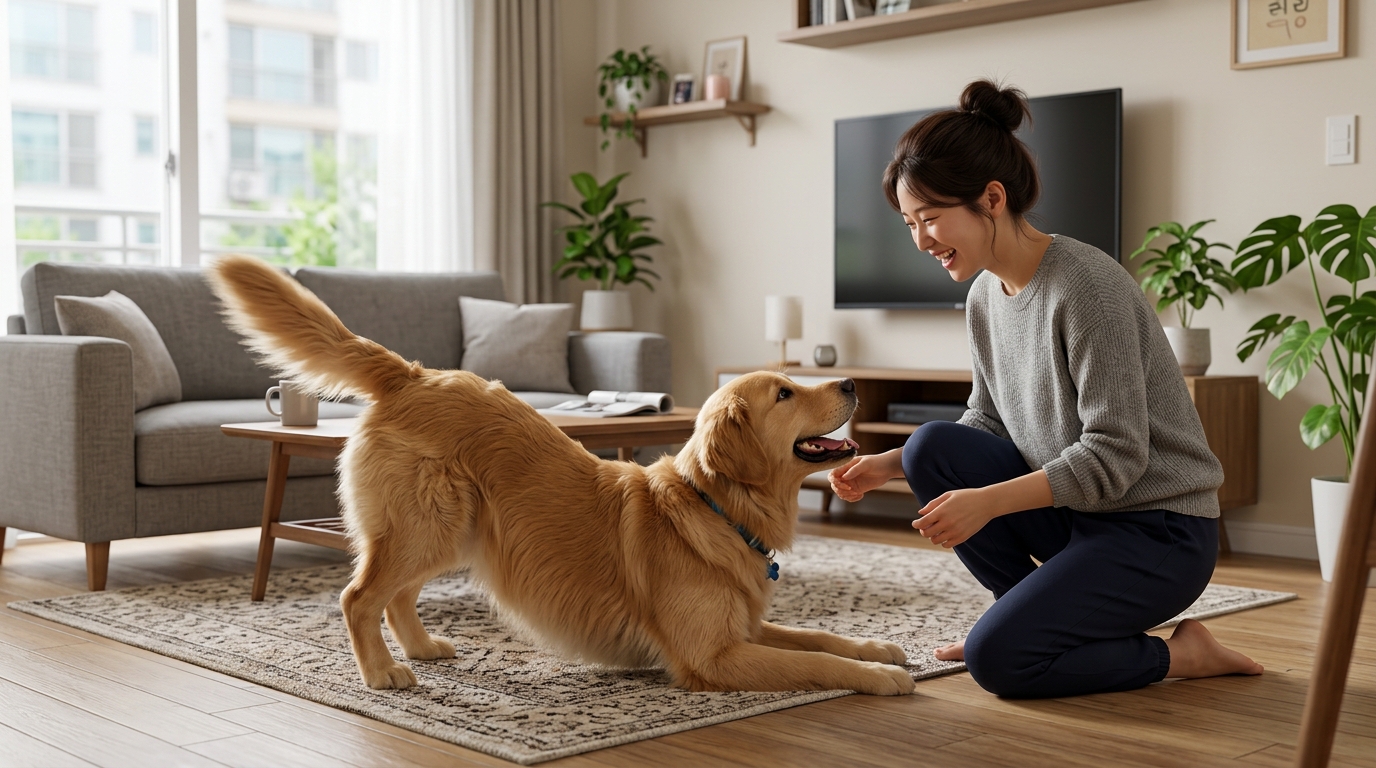
Interpreting Dog Moods by Posture: A Veterinary and Behavioral Mechanism Analysis of 12 Body Languages
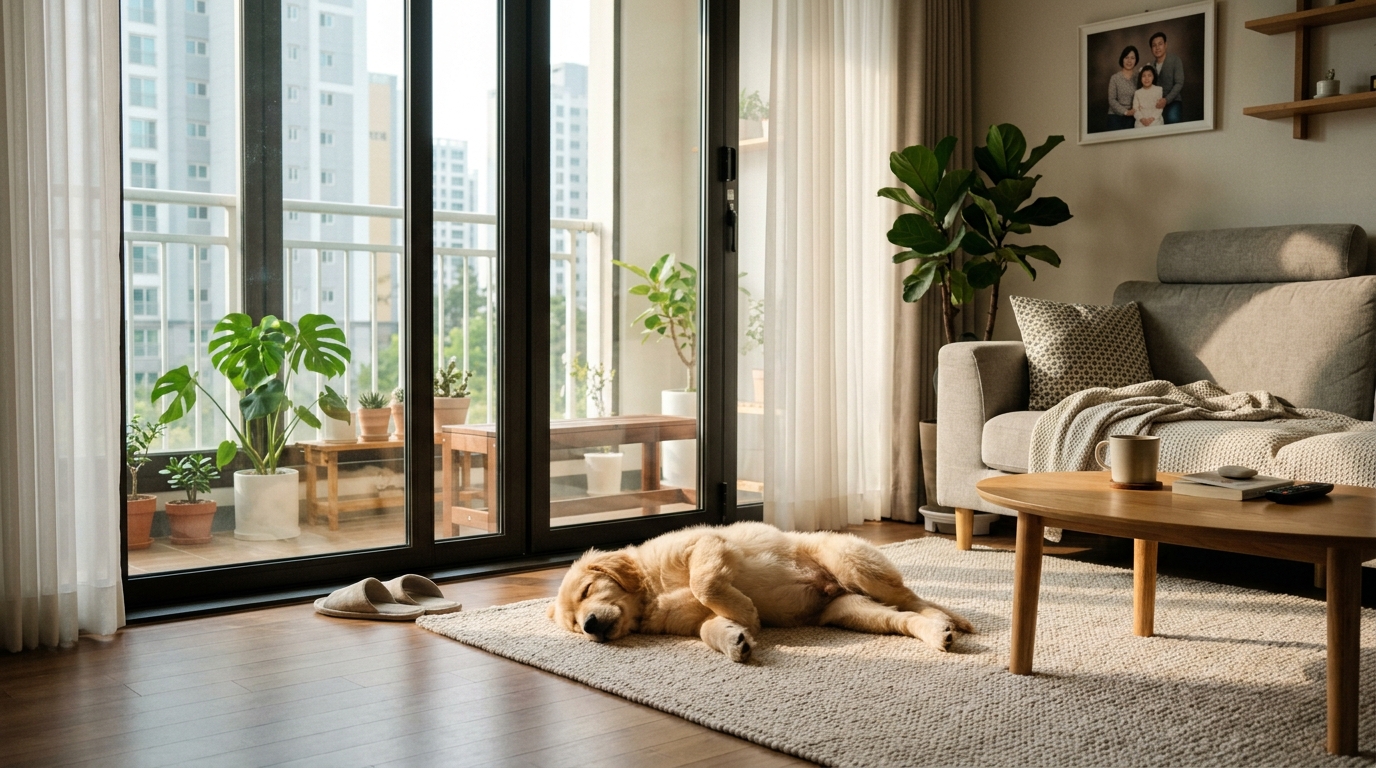
Why Dogs Dislike Having Raspberries Blown on Their Bellies: A Veterinary Scientific Analysis of Skin Sensory Receptor Stimulation
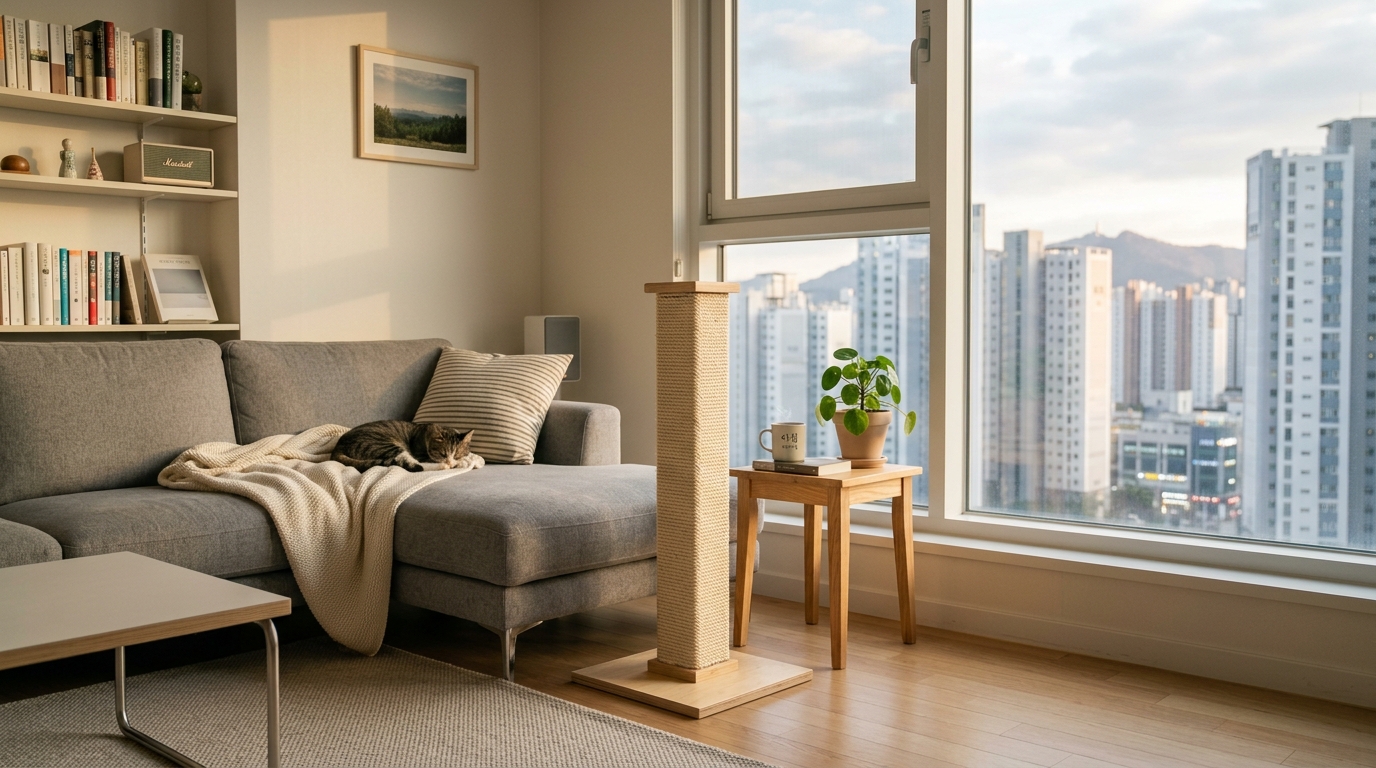
Why Cats Obsess Over Scratcher Pads and the Placement Formula to Relieve Territorial Marking Stress
Comments (0)
No comments yet. Be the first to leave one!