
Why Cats Obsess Over Scratcher Pads and the Placement Formula to Relieve Territorial Marking Stress
Magentalab Research Team
July 13, 2026
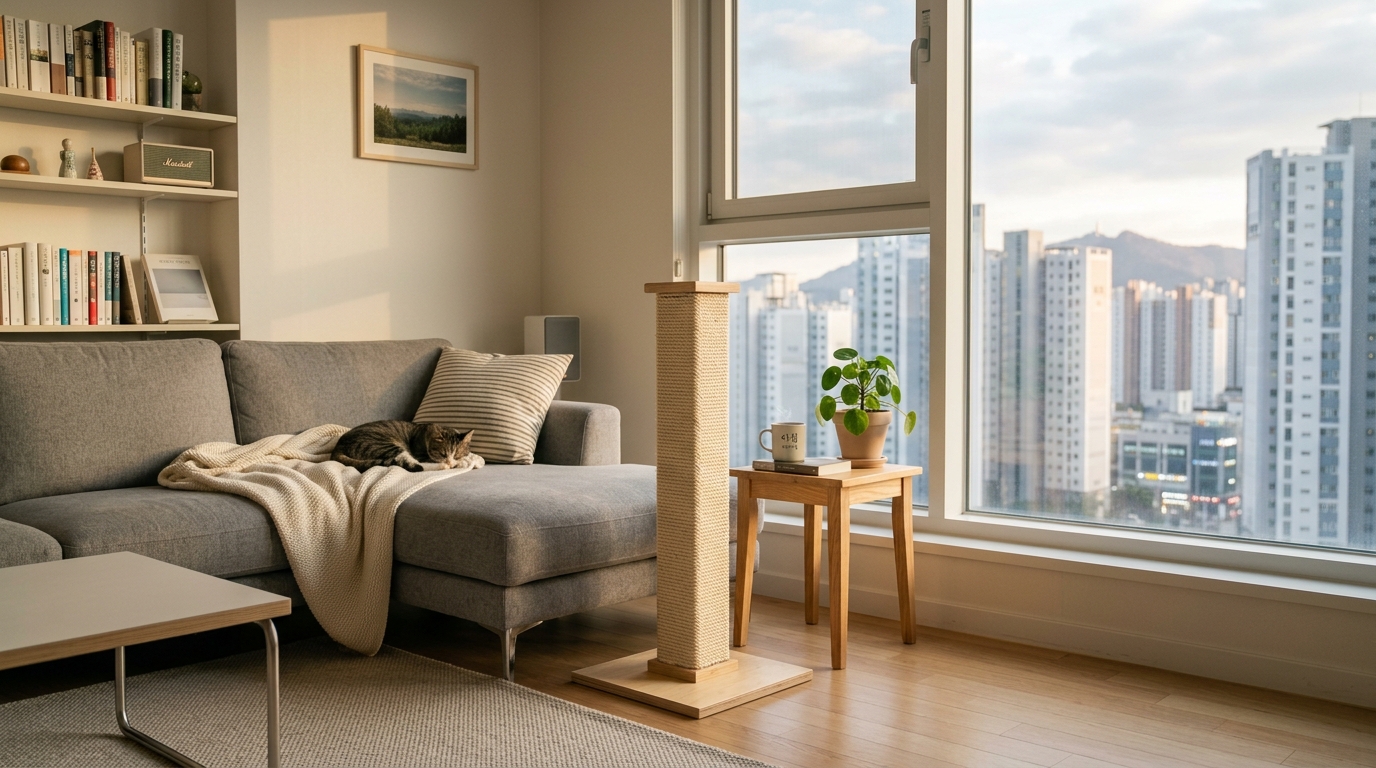
Hello! I am Dachshund Ansim-i, Chief Researcher at the Magentalab Pet Research Institute! Today, I’ve brought another informative research report to help ensure a happy life together for you and your furry friends.
A cat shredding the living room sofa, wallpaper, or expensive furniture is one of the most baffling headaches for beginner pet parents. Many people mistake this for simple claw-sharpening and either scold the cat or block the furniture, but this is an incorrect response that interferes with the cat’s instinctual communication method and autonomic nervous system stability. Today, we will examine the behavioral root of why cats obsess over scratcher pads and scratch furniture (pheromone marking) and the scientific screening placement formula to fundamentally end territorial stress.
Summary of Feline Scratching Instincts and Territorial Placement Formula
| Classification | Interdigital Gland Pheromone Marking (Chemical Sign) | Visual Territorial Marking (Visual Sign) |
| Behavioral Trigger Mechanism | Smearing territorial hormones secreted from the Interdigital Glands between the paw pads. | Leaving claw scratch marks on furniture surfaces to declare their territory to intruders. |
| Physical & Neurological Benefits | Scratching off the old outer sheath of the claw to expose the sharp new claw, alongside stretching effects. | Activating shoulder and spinal muscles and stabilizing the autonomic nervous system through endorphin secretion. |
| Destructive Behavior Triggers | External expression of Territorial Stress caused by multi-cat conflicts, unfamiliar noises, moving, etc. | Targeting furniture that leaves the clearest marks when feeling a lack of territorial marking. |
| Optimal Placement Core Formula | Constructing a multi-placement layout: [Pathway hubs + right next to sleeping areas + door/window entrances]. | Fixing alternative scratchers directly next to the targeted furniture. |
1. The Physical Reasons Cats Scratch Furniture and the Science of Interdigital Gland Pheromones
Wrinkled crevices between a cat’s paw pads contain microscopic glands called Interdigital Glands. When a cat strongly presses and scratches a vertical or horizontal surface with its claws, unique chemical territorial markers known as Feline Interdigital Semiochemicals are released and smeared onto the surface.

While completely undetectable to the human sense of smell, these interdigital pheromones act as a chemical nameplate, delivering clear information to other cats: “This is my territory, and I am safe and comfortable.” Furthermore, scratching is a physiological claw-grooming process that sheds the outer sheath to manage the sharp new claw underneath. Simultaneously, it is an autonomic nervous system stress-relief exercise that maximally stretches the spinal and shoulder muscles, facilitating blood flow to the brain and triggering the release of dopamine and endorphins.

2. Territorial Stress Triggers That Ruin Household Furniture and Analysis of Destructive Behaviors
Many pet parents witness their cats deliberately choosing to shred the living room sofa, bed corners, or wallpaper even after being provided with a scratcher. This indicates a severe accumulation of Territorial Stress in the cat.

-
Sensing External Threats: Hearing footsteps outside the door or smelling stray cats/sensing territorial invasion signals through the window induces extreme fear in cats that intruders might enter their territory.
-
Bold Marking Attempts: When anxiety peaks, cats attempt to amplify their presence by obsessively leaving visual and chemical marks on the largest items in the house (sofas, living room cabinets, etc.) that leave the widest and clearest traces, or at pathways intruders must cross. Scolding them for this only further stimulates their territorial anxiety, leading to a vicious cycle of them hiding and destroying more furniture. Therefore, pet parents must follow behavioral guidelines.

3. The 3-Step Scratcher Placement Formula to Calm Territorial Anxiety Stress
To stop a cat’s furniture-destroying instincts and stabilize its territorial psychology, you must scientifically place scratchers in locations more attractive than the furniture itself, rather than simply blocking it.

-
The First Boundary – Placements at Entrances and Windows (External Connections): Place large scratchers right at the front door or directly under windows where the risk of external intrusion is felt. This encourages them to scratch on the spot upon detecting an intruder, expressing territorial ownership and instantly relieving anxiety stress.
-
Hubs of Movement – Placements at Main Pathways and Corridors: Place vertical scratchers at the hubs of their daily movement routes—such as hallway corners connecting rooms or pathways to the litter box—that the cat passes through at least 10 times a day. You must help them easily rub their interdigital pheromones as they come and go.
-
The Beginning of Relaxation – Placements Right Next to Sleep Areas and Cat Trees: Cats instinctively stretch their bodies and scratch to relax their muscles immediately upon waking up. Secure a scratching pad within 1 meter of their bed, cushion, or hammock.

4. Finding Your Cat’s Perfect Taste: The Scientific Matching of Scratcher Shapes and Materials
No matter how perfectly you place a scratcher at a movement hub, if your cat ignores it and continues scratching furniture, it is because the “material” or “shape” does not suit their preferences. Every cat has distinct likes and dislikes regarding the tactile feel on their claw tips and the direction in which they stretch their muscles.
-
Vertical vs. Horizontal: If they primarily scratch while standing up and leaning against wallpaper or sofa armrests, they prefer a “Vertical” shape. In this case, a sturdy pillar-type scratcher that is at least 1.5 times their body length and does not wobble even when they put their full weight on it is essential. Conversely, if they prefer digging into rugs or carpets on the floor, they are “Horizontal” scratchers, and a flat or sofa-shaped scratcher must be stably laid on the floor.
-
The Scratcher Buffet Test: The material that catches their claws is another core factor dictating a cat’s choice. Cats have different material preferences: ‘Cardboard’, which allows claws to sink deeply and offers a satisfying tearing sensation; ‘Sisal’, which provides a rough resistance most similar to wild tree bark; or tight, soft ‘Carpet/Fabric’.

Pet parents should initially conduct a ‘Buffet Test’ by simultaneously providing 3 to 4 scratchers of different shapes and materials to observe which one the cat rubs the most interdigital pheromones on and obsesses over. Identifying their precise taste before upgrading to a main, large scratcher is the shortcut to preventing unnecessary expenses and accelerating the stabilization of your cat’s territory.
Recommended Research Data 🕸️

Why Dogs Dislike Having Raspberries Blown on Their Bellies: A Veterinary Scientific Analysis of Skin Sensory Receptor Stimulation
The Heart of the Surviving Pet Living with a Pet Parent Suffering from Pet Loss Syndrome
Reasons for Feline Dawn Zoomies and How to Mitigate Nocturnal Vocalization
Comments (0)
No comments yet. Be the first to leave one!