
Distinguishing Polydipsia in Senior Dogs and Suspicion of Canine Cushing’s Syndrome (Hyperadrenocorticism)
Magentalab Research Team
July 14, 2026
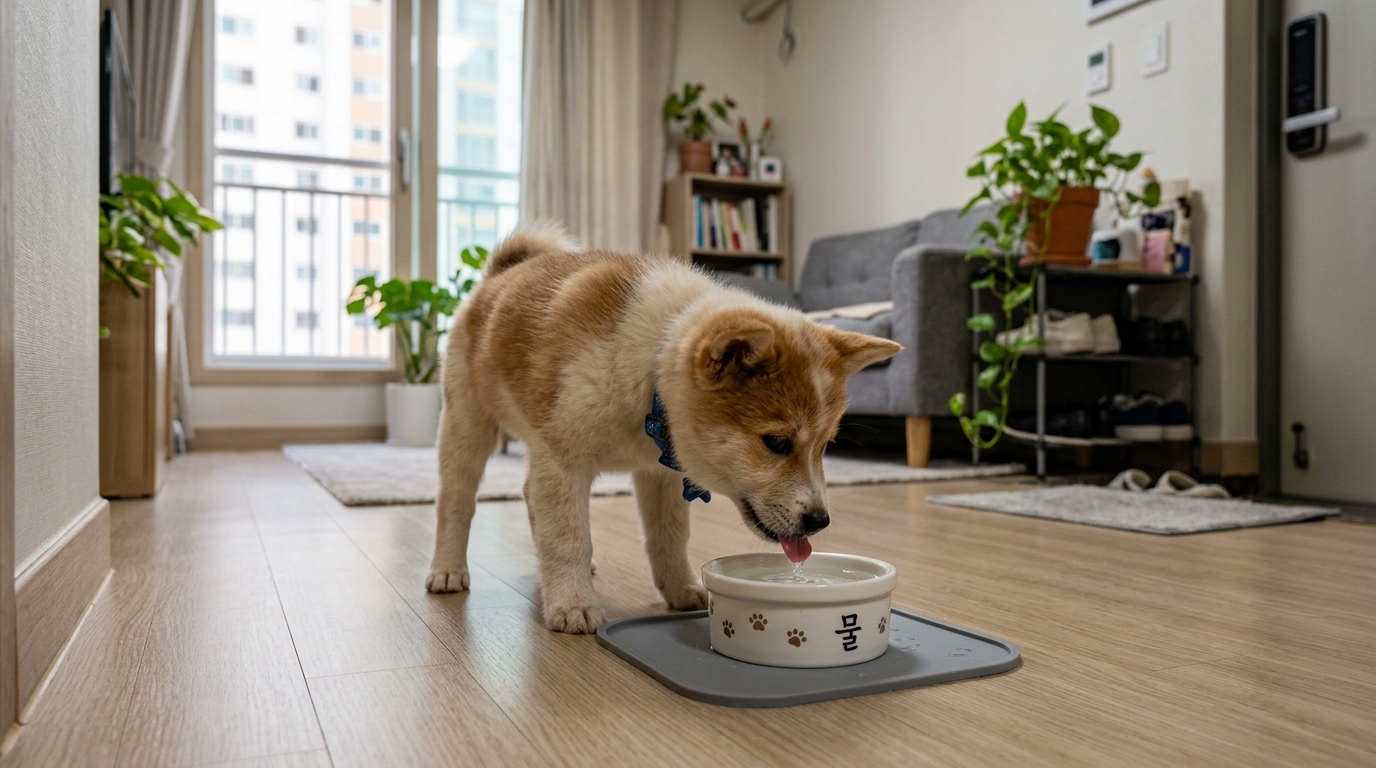
Hello! I am Dachshund Ansim-i, Chief Researcher at the Magentalab Pet Research Institute! Today, I’ve brought another informative research report to help ensure a happy life together for you and your furry friends.
Pet parents caring for senior dogs often witness a day where their dog starts emptying the water bowl at an abnormal speed and having potty accidents throughout the night. Many owners tend to dismiss this, thinking, “Maybe they’re just thirsty because they’re getting older,” or “It must be a simple sign of aging.” However, if symptoms of Polydipsia (excessive thirst) and Polyuria (excessive urination) are accompanied by a “pot-bellied” appearance, this is a classic clinical warning sign of Cushing’s syndrome (Hyperadrenocorticism), often called the king of hormonal diseases in dogs. Today, I will meticulously examine the pathological destruction mechanisms caused by hormonal oversecretion, and the harmful ingredients and warning signs that pet parents must avoid to manage this condition.
Table: Hormonal Stimuli / Harmful Environmental Factors
| Category | Harmful Component & Stress Mechanism | Internal Action & Adrenal Stimulation Mechanism (YMYL) | Acute Poisoning/Crisis Symptoms to Monitor | Emergency Response & Hormonal Prevention Solution |
| Steroid Overuse | Glucocorticoids (Steroids) | Long-term administration causes adrenal atrophy, inducing Iatrogenic Cushing’s syndrome or adrenal crisis upon abrupt cessation. | Drooling, vomiting, lethargy, plummeting heart rate, hypotensive collapse. | Absolute ban on administering steroid-based eye drops or skin ointments without a vet’s prescription. |
| High-Sodium Diet | Salt, Processed Jerky (Sodium) | Sodium retention causes an abnormal surge in blood volume, destroying the glomerular filtration rate (GFR) and inducing hypertension. | Explosive thirst, intensified panting, bloody urine, inability to stand. | Switch to homemade or prescribed diets with strictly restricted sodium (under 0.2% on a DM basis). |
| Acute Stress Environment | Corticotropin-Releasing Factor (CRH) | Acute stress from grooming, moving, or noise stimulates the Hypothalamic-Pituitary-Adrenal (HPA) Axis, inducing an explosion of cortisol secretion. | Excessive panting, restlessness, hyperventilation, temporary glucose shock, coma. | Isolate from high-stress environments like night walks or noisy settings; consider prescribing stabilizers. |
| High-Carbohydrate Diet | Glycemic Index (GI) high foods (Potato, Rice) | Insulin resistance is maximized due to the glucocorticoid action of cortisol, leading to diabetic complications. | Polyphagia (excessive appetite), abdominal distension without weight loss, sticky/smelly diabetic urine. | Discontinue potato starch-based foods; feed a diet with low-GI complex carbohydrates and crude protein. |

1. Distinguishing Polydipsia in Senior Dogs and Suspicion of Canine Cushing’s Syndrome
-
The Identity of Hormonal Imbalance Indicated by Daily Water Intake Over 100ml/kg: A normal daily water intake for dogs is approximately 50–60ml per 1kg of body weight. If your 5kg dog is drinking over 500ml (a full bottle of water) daily, it is medically diagnosed as “Polydipsia/Polyuria (PD/PU).” This goes beyond simple thirst; it occurs because excess Cortisol—a stress hormone secreted by the adrenal glands—interferes with the kidney’s ability to concentrate urine. To prevent dehydration, the dog instinctively heads straight for the water bowl.
-
Cortisol Overload Triggered by Pituitary Adenomas and Adrenal Tumors: Cushing’s syndrome arises from two anatomical pathways. The first is “Pituitary-Dependent (PDH),” where a micro-adenoma in the pituitary gland over-secretes ACTH, stimulating the adrenals; this accounts for over 85% of cases. The second is “Adrenal-Dependent (ADH),” where a tumor forms directly on the adrenal gland above the kidney. Either way, Cortisol is secreted without a brake, indiscriminately shaking up systemic cellular metabolism.

2. The Pathology of the “Pot-Bellied” Appearance
Many pet parents try to put their dogs on a diet, thinking the potbelly is due to overeating, only to be diagnosed with Cushing’s syndrome at the clinic.
-
Abnormal Fat Redistribution & Abdominal Muscle Weakening: Cortisol is fundamentally a catabolic hormone that breaks down protein into glucose. Excess hormone forces the breakdown of muscle proteins supporting the spine and limbs. Specifically, the abdominal wall muscles supporting the peritoneum and internal organs thin and lose strength, causing the organs to sag downward. Meanwhile, cortisol redistributes fat from the limbs to the center of the body (around the abdomen and neck), completing the “Pot-bellied” look.
-
Adrenal Enlargement and Hepatic Glycogen Accumulation: Cortisol forces massive amounts of glycogen into liver cells, causing “Hepatomegaly” (enlarged liver). The massive, swollen liver pushes against the abdominal space, making the belly protrude even more.

3. Clinical Mechanisms of Muscle Atrophy, Hair Loss, and Skin Thinning
Chronic cortisol overload causes secondary surgical complications by collapsing the skin’s immune system and epithelial cell layers.
-
Histological Causes of Epithelial Atrophy: Cortisol blocks the synthesis of collagen and elastic fibers in the skin. The dermis thins to the point where micro-vessels become visible, and the skin becomes hypersensitive to trauma, tearing easily from the slightest scratch or contact with furniture corners.
-
Symmetrical Alopecia and Calcinosis Cutis: Cushing’s patients show “Symmetrical Alopecia,” where hair loss occurs identically on both sides of the spine. Since the hair follicle growth cycle (Anagen phase) is forcibly halted, new hair cannot grow back. This is often accompanied by “Calcinosis cutis,” where calcium deposits accumulate in the thinned skin, feeling like rough bumps to the touch and causing secondary bacterial folliculitis.

4. Nutritional Management Tips and Recommended Healthy Treats for Adrenal Stabilization
-
Step 1: Restrict DM Carbohydrates to Under 30% for Glucose Control: Cortisol is a powerful counter-hormone that blocks insulin’s blood-glucose-lowering ability. High-glucose diets will destroy the pancreas, rapidly leading to Diabetes Mellitus complications. Always reverse-calculate NFE (Carbohydrates) from the label and choose a low-sugar prescription diet controlled to under 30% on a Dry Matter basis.
-
Step 2: Low-Sodium & High-Fiber Diet to Prevent Glomerular Sclerosis: Cushing’s patients have high blood pressure due to electrolyte (sodium) retention. Ensure the sodium ratio is strictly restricted to under 0.2% on a DM basis. Also, feed diets with a high content of soluble dietary fiber (like Pectin) to induce satiety and prevent rapid blood sugar spikes.
-
Step 3: Recommended Natural Alternative Treats for Adrenal Stability:
-
Oven-baked Lean Chicken Breast: Extremely low in fat with excellent essential amino acid ratios, supplying the muscle protein lost due to Cushing’s.
-
Steamed Broccoli & Organic Cauliflower: Rich in DIM (Diindolylmethane), an antioxidant that helps reduce oxidative stress in hormonal metabolic pathways and supports adrenal health.
-
Freeze-Dried Blueberries & Cranberries: Packed with antioxidant polyphenols, they protect the renal vascular network and prevent urinary tract infections.
-

5. Chief Researcher Ansim-i’s Nutrition and Digestive Guardian Prescription
Ansim-i completely empathizes with and comforts the deep sorrow and earnest desperation of pet parents who have shed tears, wondering, “Is it my fault for not raising them properly?” while watching their child pace around the water bowl all day and seeing the pot-belly bulging like a tadpole beneath their thinned skin. Cushing’s syndrome is not your fault; it is simply a metabolic dysregulation of endocrine hormones that commonly visits dogs entering their senior years.

If you proceed with adrenal cortisol level control through Trilostane medication prescription, combined with dietary improvements that strictly exclude sodium and carbohydrates, your furry friend will break free from their obsession with the water bowl, regain their soft and healthy skin, and comfortably fall asleep in your arms. Ansim-i will accompany you on this journey to the end as a lighthouse of veterinary science. Stay strong!
Recommended Research Data 🕸️

A Comprehensive Guide to Cat Bad Breath: Causes, the Mechanism of Periodontitis-Induced Systemic Organ Failure, and Dental Scaling Costs
Causes of Canine Hydrocephalus in Maltese and Chihuahuas: Screening Early Symptoms of Open Fontanelle and the Golden Time for Emergency Care

Limitations of Creatinine Testing by Feline Chronic Kidney Disease Stage and SDMA Early Diagnosis Metrics
Comments (0)
No comments yet. Be the first to leave one!