
How to Distinguish Breathing Sounds (Stertor) in Brachycephalic Breeds like Shih Tzus and Pekingese, and the Optimal Summer AC Temperature
Magentalab Research Team
July 18, 2026
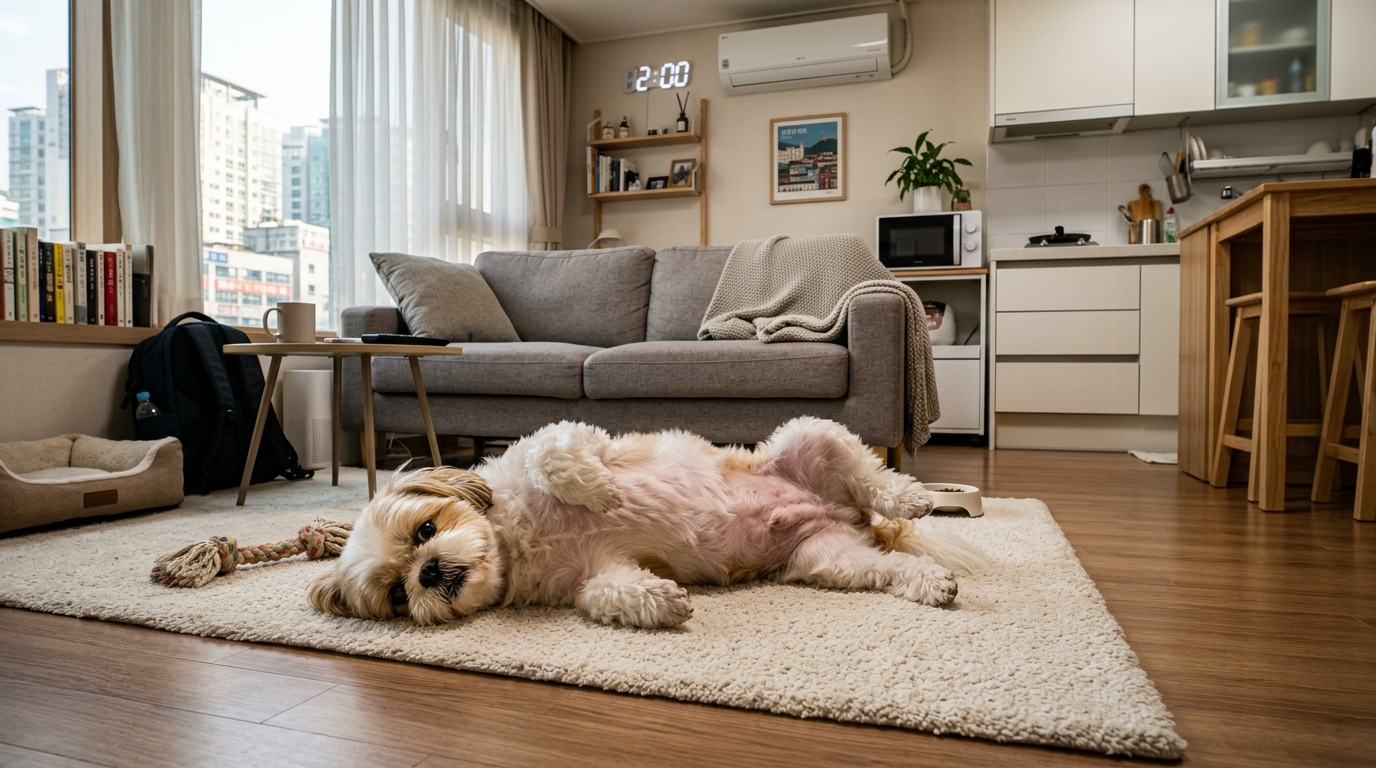
Hello! I am Dachshund Ansim-i, a Senior Researcher at Magentalab’s Pet Research Institute. Today, I am sharing an informative veterinary research report to ensure a happy journey for you and your dog.
Brachycephalic dogs with adorable flat faces, such as Shih Tzus and Pekingese, often face life-threatening situations every summer (June to August) as temperatures rise. Due to their anatomical structure—specifically, narrowed nostrils (stenotic nares) and an elongated soft palate—their ability to regulate body temperature is less than half that of typical breeds. I will comprehensively guide you, based on veterinary evidence, on how to distinguish whether your dog’s rough breathing is simple physiological snoring or a fatal warning sign of an immediate oxygen cutoff, along with the optimal AC temperature settings for the summer.
1. Anatomical Differentiation of Breathing Sounds Due to Nasal Stenosis in Shih Tzus and Pekingese
Breathing sounds in brachycephalic dogs are clearly distinguished by the anatomical location and the cause of the sound. The first step in home assessment is to clearly recognize the difference between a friction sound (stertor) caused by narrow nostrils and a sharp wheezing sound (stridor) caused by airway stenosis. Please regularly check the structured scale table indicators below.
The schema table below is a comparative guide on the anatomical origins of sounds and the danger signals that require an immediate vet visit.
| Brachycephalic Respiratory Distress Stage | Actual Breathing Sound Indicators Pet Parents Must Recognize | Internal Medical & Anatomical Mechanisms | Researcher Ansim-i’s Correct Veterinary Response |
| Stage 1: Stertor | Constant low, dull, snoring, or pig-like snorting sounds. | Vibration of narrowed external nares (nostrils) and excessively elongated soft palate tissue. | Though mild normally, if it causes obstructive sleep apnea, consult a vet immediately for potential surgery. |
| Stage 2: Stridor | High-pitched, metallic wheezing sounds appear during excitement or exposure to high temperatures. | Abnormal narrowing of the lower airway, such as laryngeal collapse or tracheal hypoplasia. | [⚠️ Ultra-Emergency] If accompanied by cyanosis (the tongue turning purple), rush to an oxygen room at an emergency vet immediately. |
| Stage 3: Bubbling/Frothy Breathing | Gurgling and bubbling sounds from the throat; vomiting frothy saliva. | High possibility of aspiration pneumonia due to stomach acid reflux or pulmonary edema (fluid accumulating in the lungs’ alveoli). | Immediately remove any collars compressing the neck, lower the body temperature using the heat of vaporization, and rush to the emergency room. |

2. Optimal Summer Indoor AC Temperature and Humidity Settings to Prevent Brachycephalic Airway Syndrome (BAS)
Dogs have very few sweat glands, so they release internal body heat by evaporating saliva from their tongues and panting. However, Shih Tzus and Pekingese, who have extremely narrow airways, severely lack upper and lower respiratory capacity, making their heat dissipation efficiency exceptionally poor. Therefore, to prevent heatstroke shock caused by Brachycephalic Airway Syndrome (BAS) during the hot summer, pet parents must artificially optimize the indoor environment.

-
Optimal Summer AC Temperature for Brachycephalic Breeds: 22°C ~ 24°C / 71.6°F ~ 75.2°F (Set it lower than the 25~26°C / 77~78.8°F recommended for typical breeds).
-
Optimal Indoor Humidity Guide: 40% ~ 50% (High humidity completely blocks the body’s ability to release heat and evaporate saliva through breathing).
3. Hazardous Ingredients That Induce Oxygen Deprivation in Brachycephalic Dogs with Depressed Respiration
When specific dangerous ingredients enter the body of a brachycephalic dog with compromised respiratory abilities, it worsens red blood cell damage or central nervous system paralysis, leading to a fatal emergency where the oxygen supply is completely cut off.

The table below is a summary guideline of fatal food ingredients and clinical symptoms that maximize airway overload and blood oxygen deprivation, inducing fatal shock when accidentally ingested by a brachycephalic dog.
| Hazardous Ingredients | Causative Substances | Physiological Toxicity Mechanisms | Aggravated Clinical Poisoning Symptoms in Brachycephalic Breeds | Risk Prevention & Response Tips |
| Chocolate and Caffeine | Theobromine, Caffeine | Methylxanthines excessively stimulate the heart muscle, constrict the bronchi, and induce tachycardia (rapid heart rate), drastically increasing the airway’s oxygen consumption. | Rapid onset of breathing difficulty, open-mouth breathing, cyanosis (blue tongue), arrhythmic shock. | Store chocolate products behind barriers higher than your dog can jump. |
| Onions and Garlic | Allyl Propyl Disulfide | Oxidative damage to red blood cell haptoglobin forms Heinz bodies, completely wiping out oxygen-carrying red blood cells. | Severe acute oxygen deficiency, chronic anemia, fainting and coma even with mild movement. | Completely block exposure to leftovers like seasoned stews or black bean noodles. |
| Xylitol | Xylitol (Gum/Candies) | Rapidly promotes insulin secretion from the pancreas, cutting off glucose supply to the brain within 30 minutes and inducing acute hypoglycemic shock. | Severe tremors, muscle paralysis, respiratory arrest, shock due to acute liver failure. | Store gum or candies containing xylitol in zipped bags. |
| Grapes and Raisins | Tartaric Acid | Causes acute necrosis of renal glomeruli and tubular cells, blocking the excretion of uremic toxins and leading to acute renal failure within 24 hours. | Acute vomiting, worsening dehydration due to uremia, respiratory overload, and near-death state. | Strictly prohibit feeding any breads or snacks containing raisins. |

4. Action Guidelines for Pet Parents to Stabilize a Brachycephalic Dog’s Breathing During a Heatstroke Emergency
-
Immediate Lukewarm Water Spray and Forced Air Circulation to Lower Body Temperature
If your dog pants excessively, drools, and their body temperature spikes above 39.5°C (103.1°F), they are in the early stages of heatstroke. In this state, you must never pour ice water on them or wrap their entire body in cold wet towels. Doing so causes peripheral blood vessels to strictly constrict, trapping the heat inside the body—a fatal side effect. You must spray lukewarm water all over their body and blow cool air directly using an air conditioner or fan to cool them down via the heat of vaporization.

-
Remove Collars and Secure a Comfortable Airway
For a brachycephalic dog struggling to breathe, a standard collar acts like a deadly weapon that strongly compresses the airway. Immediately remove all equipment touching the neck (ID tags, harnesses, collars, etc.), keep their neck straight to open the air passage, and transport them to a veterinary hospital as quickly as possible.

5. Senior Researcher Ansim-i’s Urinary and Respiratory Guardian Prescription
The rough breathing sounds produced through the narrow airways of Shih Tzus and Pekingese are not merely unique traits; they are tearful survival signals as they struggle to breathe comfortably every single moment.
Pet parents of brachycephalic breeds, Ansim-i deeply and professionally empathizes with your exhaustion and profound care. I know you fret every night when your dog’s breathing gets rough at the slightest temperature rise in summer, and worry more about your dog’s health than the electric bill from keeping the AC on all night. It is precisely because you have opened up their airways with a cool indoor temperature and precise environmental settings that your dog can sleep peacefully again tonight. Magentalab’s independent calculation funnel will always serve as a reliable lighthouse on your journey for nutritional and prescription guidelines.
Recommended Research Data 🕸️

Genetic Heart Diseases Causing Purple Tongue (Cyanosis) in Dogs and the Golden Time for First Aid

IVDD in Dachshunds & Corgis: Hind Leg Paralysis Symptoms by Grade and Conservative Treatment Options

Genetic Testing for Feline Hypertrophic Cardiomyopathy (HCM) in Maine Coons & Ragdolls: Timing and Emergency Response to Acute Hind Leg Paralysis (ATE) / Saddle Thrombus
Comments (0)
No comments yet. Be the first to leave one!