
Did You Think They Were Being Stubborn and Scold Them More? 3 Rescue Signals Hidden in Dog Yawns That 99% of Novice Pet Parents Misunderstand
Magentalab Research Team
August 8, 2026
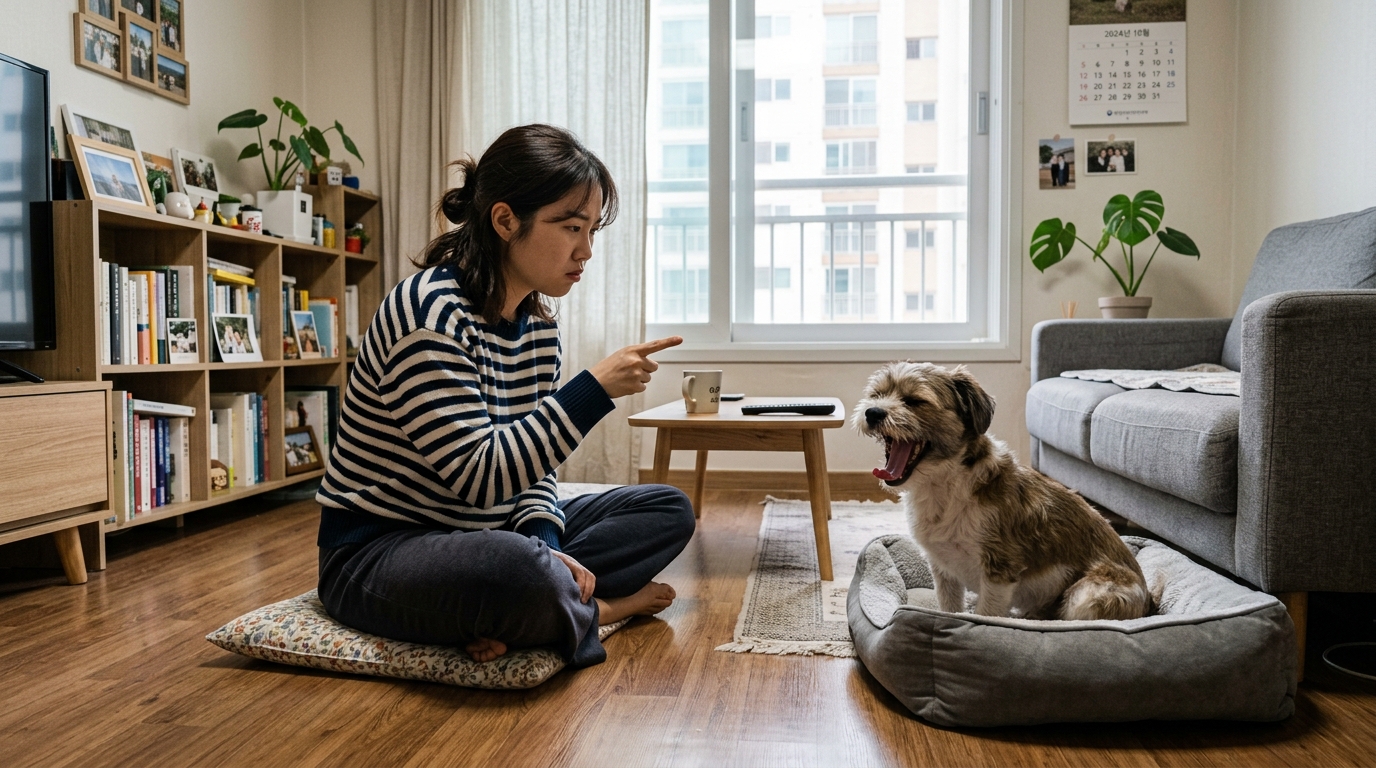
Why Does My Dog Yawn When Being Scolded? It’s Not Defiance — It’s a Calming Signal
Hello! I’m Ansim-i the Dachshund, Senior Researcher at Magentalab Pet Research Institute! Today I’ve brought my magnifying glass once again to help protect the precious bond between you and your dog.
Have you ever been correcting your dog only to watch them awkwardly look away and let out a big “Yaaawn~”? In that moment you might have felt hurt or frustrated, thinking, “Are they bored with me?” or “Are they deliberately ignoring me and being rebellious?”
Is your dog really just being naughty? Let’s carefully uncover what they are truly trying to tell you.

1. The Real Reason Dogs Yawn When Being Scolded
A dog’s yawn is not only a sign of sleepiness. When it happens during a scolding, it is actually a heartfelt non-verbal message known as a Calming Signal.

① Self-soothing and tension relief When a pet parent raises their voice or speaks in a low, stern tone, dogs instinctively feel strong threat and tension. Yawning helps increase oxygen flow to the brain and calms their racing heart.
② A signal of intense stress It is the dog’s way of saying with their whole body, “I’m really scared right now.” The situation feels overwhelming, and the yawn is an attempt to cope with that extreme stress.
③ Conflict-avoidance behavior (the peacemaker dog) In the canine world, yawning is a classic way of showing “I mean no harm.” It is a tearful plea that says, “I know I did something wrong — please calm down. I don’t want to fight.” The dog is desperately trying to de-escalate the conflict and restore peace with you.

2. Normal Reaction vs. Warning Signs
Not every yawn means the same thing. It is important to distinguish whether the behavior is a temporary coping strategy or a serious psychological red flag.

● Within the normal range
The dog gives one or two big yawns after being corrected, then gently wags its tail or comes over to lean against you for comfort. This is a positive sign that the situation has been resolved and the dog has successfully regulated its own stress.
● Warning signs (immediate attention needed)
If yawning is accompanied by any of the following, the dog is experiencing severe fear or panic:
- Full-body trembling
- Hiding under furniture or in corners and refusing to come out
- Tucking the tail tightly between the hind legs
- Constantly licking the nose or panting heavily (hyperventilation)
If these reactions happen repeatedly, the dog’s confidence can drop and the stress may develop into serious anxiety. Please take it seriously.

3. How Pet Parents Should Respond
So what should you do when your dog yawns during a correction? Here is clear guidance from Researcher Ansim-i.

① Use short, consistent cues instead of raising your voice
Emotional shouting or angry lectures do not help training. When your dog does something unwanted, deliver a single short, firm word such as “No” or “Leave it” in a low, calm voice.
② Switch to positive reinforcement
Pointing out mistakes is far less effective than rewarding the right behavior. For example, instead of scolding when the dog starts chewing something inappropriate, offer a proper toy and generously praise and reward when they take it.
③ Physical punishment is strictly forbidden
Punishment only instills deep fear. Never scold a yawning dog with “How dare you yawn at me!” When you see the yawn, recognize it as a signal that your correction is too intense, and stop immediately.

4. When to Seek Professional Help
If your dog yawns excessively in everyday situations with no apparent reason, or always seems anxious, closer observation is needed.
If the dog shows excessive yawning, howling, or drooling when left alone (signs of separation anxiety), consult a professional behavior specialist or veterinarian for stress-reduction support and behavior guidance. Emotional issues, just like physical ones, are best addressed early.

★ Key Takeaways from Researcher Ansim-i
“Your dog’s yawn is never about being sleepy or rebellious! It is a desperate calming signal of tension and stress, a request to resolve the conflict peacefully. When you see the yawn, lower the intensity of the correction and respond with warmth.”
Recommended Research Data 🕸️

Why Do Dogs Sigh? Are They Upset? A Complete Guide to Dog Sighs and Calming Signals

Do Dogs Really Hate “Belly Raspberries”? An In-Depth Analysis of Your Dog’s True Feelings

Favorite Belly Rub Spots vs. Forbidden Zones: The Veterinary Reason Your Dog Hates “Belly Raspberries”
Comments (0)
No comments yet. Be the first to leave one!