
The Real Reason Cats Refuse Still Water and Only Seek Flowing Water
Magentalab Research Team
August 7, 2026
Hello! I’m Ansim-i the Dachshund, Senior Researcher at Magentalab Pet Research Institute! Today, I’m back with plenty of informative and healthy tips for pet parents and your precious cats.
Have you ever seen your cat completely ignore a freshly washed and filled water bowl, only to quench their thirst with dripping water from the kitchen sink or flowing water on the bathroom floor? Many pet parents must have been confused, thinking, “Why are they doing that over there when they have a perfectly good water bowl?”

Today, together with me, Ansim-i, let’s explore scientifically and easily why cats are so stubborn about flowing water over still water, and what situations are actually dangerous signals!
—
1. The Instinctual Reasons Cats Seek Flowing Water
There are scientific and instinctual reasons hidden behind our cats’ obsession with flowing water. Looking at the genetic instincts passed down from their ancestors makes it easy to understand.

First, the wild survival instinct (Still water = Contaminated water)
In the wild, stagnant, still water easily rots and provides a perfect breeding ground for bacteria and parasites. On the other hand, flowing streams or rivers are relatively clean and safe. The survival instinct that “Drinking still water makes you sick! Flowing water is safe!” is deeply engraved in a cat’s genes.
Second, fresher, more abundant oxygen and smell
Flowing water constantly interacts with the air, meaning it is rich in dissolved oxygen. For cats, who have an extremely developed sense of smell, oxygen-rich flowing water smells much fresher and more appealing. Conversely, water sitting still in a bowl collects dust, loses oxygen, and is easily perceived by a cat’s nose as “tasteless water.”

Third, visual and auditory stimulation
Cats feel a stronger curiosity toward moving objects than static ones. The sound of trickling water and the sight of sparkling, moving droplets are more than enough to stimulate a cat’s curiosity. It goes beyond simply drinking because they are thirsty; the act of drinking water itself becomes a fun game!
—
2. Distinguishing Normal Curiosity from Dangerous Signals
It is crucial to distinguish whether your furry friend simply likes flowing water or is craving water due to a health issue.

Normal: Showing interest in flowing water and playing with it
If they eat their food well, are active, drink a little from water bowls placed around the house, and only run over to watch and sip flowing water when you use the sink, they are in a very healthy and normal state! You don’t need to worry; they just find flowing water fascinating and treat it like a delicious beverage.

Dangerous: Barely drinking water at all or completely refusing it
If your cat completely ignores water in regular bowls, doesn’t even drink flowing water, and their total daily water intake is extremely low, this is a very dangerous signal. Cats naturally have a low thirst drive, but extreme dehydration can lead to kidney and urinary tract diseases, requiring your careful observation.
—
3. Smart Solutions to Increase Your Cat’s Water Intake
Then, what are some safe and healthy ways to increase the water intake of a cat who only seeks flowing water?

Method ①: Utilize a pet-specific water fountain
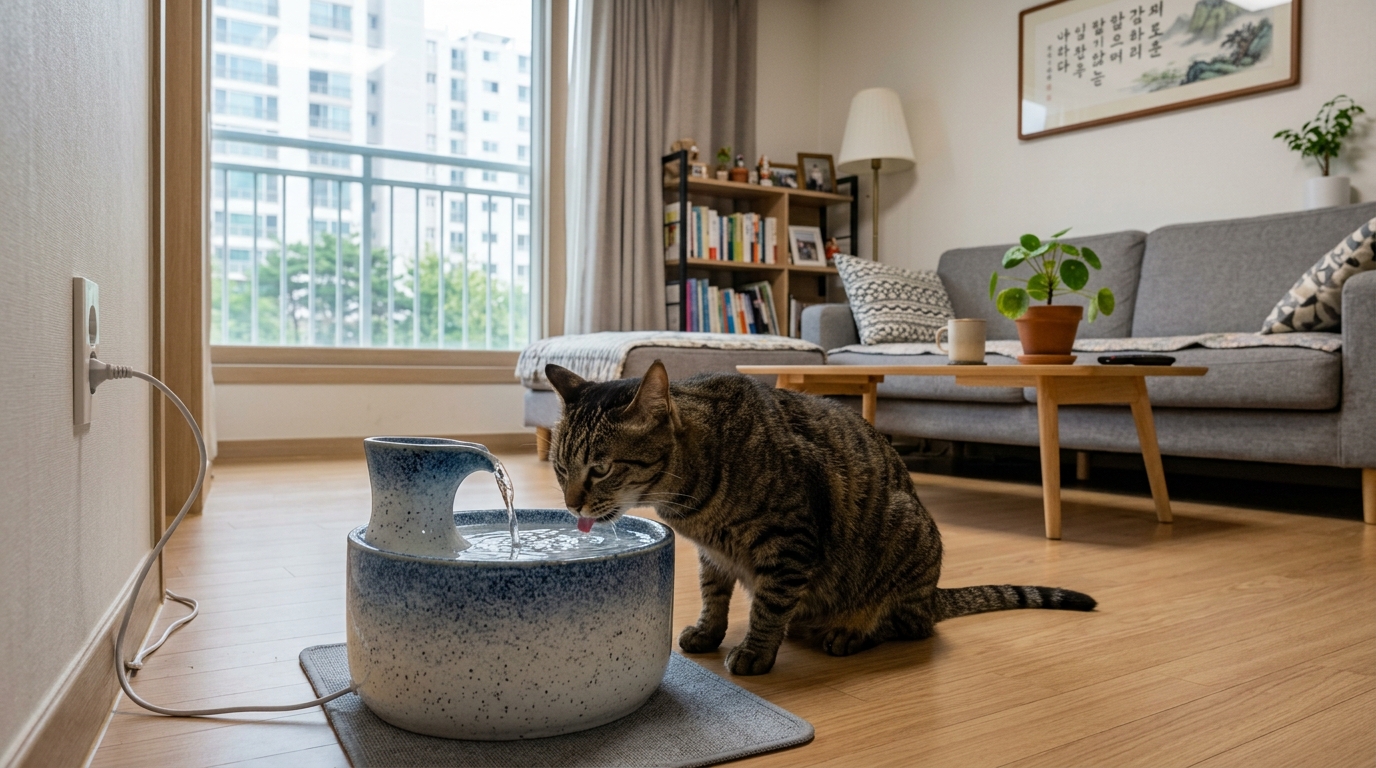
The most effective method is to install a pet water fountain where water continuously flows and circulates. The fountain’s filter catches dust and fur, and because the water constantly bubbles or flows, it provides your cat with both the freshness and fun of a wild, flowing stream.

Method ②: Diversify water bowl locations and change materials
Cats dislike having their food and water stations next to each other. Please place water bowls far from their food bowl and in several high-traffic areas they frequently pass. Also, since plastic bowls can develop micro-scratches where bacteria breed and cause odors, replacing them with glass, ceramic, or stainless steel bowls greatly helps improve hygiene and increase water consumption.
—
4. Danger Signals That Require an Immediate Vet Visit
Whether your cat drinks too little water or suddenly drinks an abnormally large amount, both can be signs of illness. If you observe the following symptoms, you must visit a veterinary clinic without delay.

-
Dehydration symptoms: When you perform the “skin tent test” (gently pulling up the skin on their back and releasing it), the skin drops slowly instead of snapping back immediately.
-
Sudden changes in urine volume: If the size of the urine clumps in the litter box suddenly becomes much smaller or much larger, or if they visit the litter box frequently but cannot urinate.
-
Lethargy and loss of appetite: If they are not drinking water, crouching in a corner, and refusing food.
Since cats have a strong instinct to hide their pain, a pet parent’s careful observation of their urination frequency and clump size is the greatest key to protecting their health!
—
5. Senior Researcher Ansim-i’s Core Summary
A cat’s preference for flowing water is a natural wild instinct. However, if left unmanaged and their water intake becomes excessively low, it can lead to terrifying diseases like Chronic Kidney Disease (CKD) or Feline Lower Urinary Tract Disease (FLUTD). Please remember that your most important role as a pet parent is to create a comfortable environment for them to drink water by using fountains and placing various water bowls!
Recommended Research Data 🕸️

Favorite Belly Rub Spots vs. Forbidden Zones: The Veterinary Reason Your Dog Hates “Belly Raspberries”

Should You Always Rub Your Dog’s Belly When They Show It? The True Meaning of Belly-Baring and How to React

Do Dogs Really Hate “Belly Raspberries”? An In-Depth Analysis of Your Dog’s True Feelings
Comments (0)
No comments yet. Be the first to leave one!