
Causes of Canine Hydrocephalus in Maltese and Chihuahuas: Screening Early Symptoms of Open Fontanelle and the Golden Time for Emergency Care
Magentalab Research Team
July 14, 2026
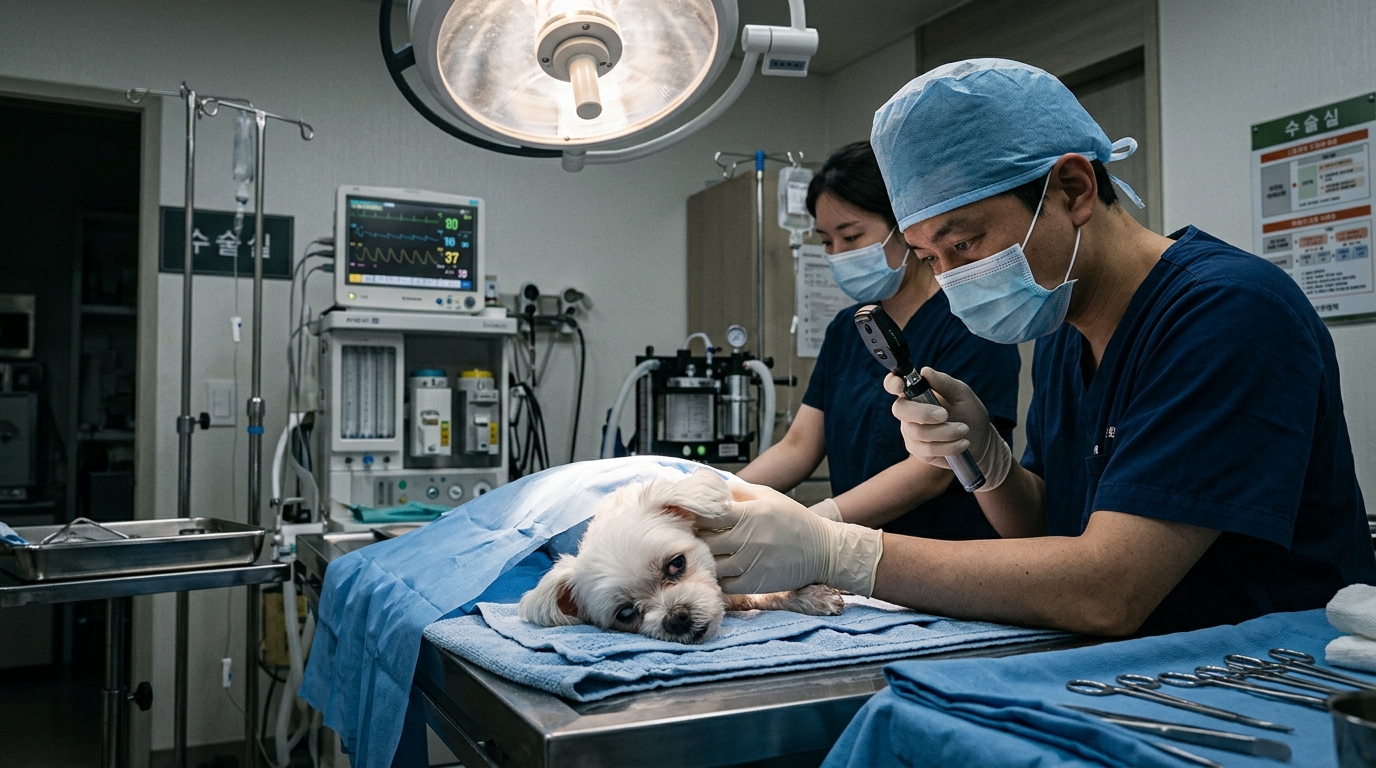
Hello! I am Dachshund Ansim-i, Chief Researcher at the Magentalab Pet Research Institute! Today, I’ve brought another informative research report to help ensure a happy life together for you and your furry friends.
Pet parents of Maltese, Chihuahuas, and Yorkshire Terriers with an “Apple head” and an “Open fontanelle” (where the parietal bones of the skull have not fully fused) always carry a heavy stone of worry in their hearts. This is due to the fear of “Hydrocephalus,” a rare, representative genetic disorder in small breeds. Subtle behaviors—such as your dog staring blankly into space, pressing their head firmly against a wall, or their eyes drifting outward like a strabismus—are silent SOS signals indicating that fluid is building up in the brain and compressing brain cells. Today, we will precisely examine the pathological mechanisms of Cerebrospinal Fluid (CSF) circulation disorders causing hydrocephalus, and provide a veterinary guide on how to respond and the golden time rules when acute intracranial pressure spikes trigger seizure-induced fainting.
Table: Intracranial Pressure (ICP) Triggers / Harmful Neurological Substances
| ICP Trigger / Harmful Substance | Core Chemical Component & Environmental Mechanism | Internal Action & Cranial Nerve Damage Mechanism (YMYL) | Acute Hydrocephalus Worsening Symptoms Upon Exposure | Immediate Emergency Response & Pet Parent Rules |
| Excitatory Neurotransmitter Inducers | Caffeine | Blocks adenosine receptors and overstimulates the central nervous system, inducing cerebral cortical potential instability and grand mal seizures. | Tachycardia (rapid heartbeat), whole-body micro-tremors, drooling, nystagmus, tachypnea (rapid breathing). | Immediately transport to a veterinary clinic for gastric lavage and anticonvulsant therapy. |
| Osmotic Pressure-Inducing Toxins | Ethylene Glycol (Antifreeze) | Even small ingestions of metabolites induce acute tubular necrosis, collapsing blood-brain barrier osmotic pressure and accelerating cerebral edema. | Ataxia (staggering similar to intoxication), vomiting, cranial nerve paralytic syncope, loss of reflexes. | Visit a vet within 1 hour of discovering lick marks for competitive inhibition therapy (e.g., Ethanol administration). |
| Osmotic Imbalance: Hypernatremia | Excessive Salt (Sodium chloride) | Sudden hypernatremia draws water out of the brain into blood vessels, causing brain cell membrane shrinkage and microhemorrhages. | Extreme thirst, vomiting, diarrhea, grand mal seizures due to cranial pressure changes, coma. | Do not force large amounts of water; use gradual electrolyte reduction therapy via IV fluids. |
| Excessive External Stress | Adrenaline & Cortisol Secretion | Sudden excitement and stress excessively push blood flow to the brain, triggering an abnormal surge in CSF production. | Head pressing, hyperventilation, temporary syncope (fainting), limb rigidity. | Isolate in a dark room to completely block external auditory/visual stimuli and prescribe ICP-lowering drugs. |

1. Causes of Hydrocephalus in Maltese & Chihuahuas and Screening Early Symptoms of Open Fontanelle
-
Neurological Mechanisms of Exotropia and Ataxia Caused by CSF Circulation Disorders
Hydrocephalus is an internal medical condition where the liquid Cerebrospinal Fluid (CSF) accumulates abnormally and excessively within the “Ventricles” (the inner spaces of the brain). Normally, CSF circulates through the brain and spinal cord, acting as a cushion and removing waste. However, due to congenital malformations of the passages or obstructions, if the drainage volume drops overwhelmingly compared to the production volume, the ventricles begin to expand.
As the expanded ventricles push the cerebral cortex strongly against the skull’s bone wall, the cranial nerves are compressed, leading to abnormal symptoms such as ataxia (wobbly gait) and circling (walking in circles). In particular, when intracranial pressure compresses the optic and oculomotor nerves, the pupils sink, and the eyes drift outward and downward, inducing the “Sunset sign” or Exotropia.
-
Unclosed Open Fontanelle and Apple-Shaped Dome Formation
Extremely small breeds like Maltese and Chihuahuas easily exhibit an “Open fontanelle” state, where the skull plates do not firmly fuse, leaving the center of the crown as soft tissue rather than bone. With an open fontanelle, even a slight increase in intracranial pressure causes a physical deformity where the top of the head bulges into a round dome shape.
If you touch the top of their head and feel a soft, boneless indentation, it means the fontanelle is open, requiring close, constant monitoring to ensure they do not receive any physical impact.

2. Behavioral Signs of Head Pressing Induced by Spikes in Canine Intracranial Pressure
When intracranial pressure (ICP) crosses a critical threshold due to hydrocephalus, dogs appeal their pain to their pet parents behaviorally.
-
Instinctual Head Pressing to Relieve Deep Cranial Pain
Sometimes, a dog will find a wall, the corner of a piece of furniture, or a dark corner of a room, firmly press their crown or forehead against it, and remain completely still. In veterinary terms, this is called “Head pressing.”
They are not just leaning absentmindedly; it is an expression of agony where they instinctively press their head against an external wall to apply frictional pressure, trying to alleviate the excruciating cranial headache caused by the swelling pressure inside the ventricles stimulating sensory nerves within the skull. This behavior indicates that severe central nervous system damage is actively progressing, making it the exact time an immediate, detailed clinical examination is required.
-
Circling and Spatial Unawareness Due to Forebrain Damage
If ICP continuously compresses the frontal lobe and cerebral hemispheres, spatial perception collapses. They show cognitive dysfunction, unable to walk straight forward, circling in only one direction, or standing blankly in front of a wall or furniture because they cannot figure out how to turn around.
Staring blankly into space and failing to make eye contact with the pet parent even when the lights are on—due to declining visual cognition—is another classic sign of end-stage degenerative hydrocephalus.

3. Emergency Response for Acute Seizures and Syncope: The Golden Time
If a potential spark occurs in the brain cells due to chronic hydrocephalus or a sudden spike in ICP, it triggers acute Generalized seizures and Syncope (fainting) shock. The pet parent’s response during this time dictates the golden time between life and death.
-
Defending Against Irreversible Neurological Destruction Within 5 Minutes of Seizure Onset
If your dog suddenly starts paddling their limbs in the air, drooling, and rolling their eyes back in a seizure, use a timer to measure the duration from the very first second. If a single seizure lasts more than 5 minutes, or if they progress into “Status epilepticus” (repeated seizures without regaining consciousness), the brain’s temperature will surge above 41°C (105.8°F), causing the brain cells to undergo protein denaturation and permanent necrosis. Anticonvulsant drugs must be administered within 5 minutes to forcibly terminate the seizure to minimize brain damage.
-
Veterinary Fall Prevention and Airway Securement Protocol During Emergencies
-
Step 1 (Do Not Touch & Prevent Falls): Never try to pick up a seizing dog or put your fingers in their mouth. Unconscious jaw muscle contractions can severely bite the pet parent or cause the dog’s airway to block. Immediately move any sharp furniture or hard objects nearby and lay down towels or blankets to prevent falls and bruising.
-
Step 2 (Secure Airway & Drain Saliva): Gently turn their head to the side to open the airway. This prevents the large amount of foamy saliva or vomit flowing out of their mouth from sliding back down their throat and causing aspiration pneumonia.
-
Step 3 (Block Stimuli & Lower Brain Temp): Turn off the lights and close the curtains to eliminate visual stimuli, and control noises like phone camera sounds. If the seizure lasts more than 3 minutes, wrap an ice pack in a towel and lightly apply it to the back of their neck and spine to physically suppress the temperature spike, and quickly transport them to a veterinary emergency room.
-

4. Environmental Care and Recommended Healthy Treats for Stabilizing Cranial Pressure
Dogs suffering from hydrocephalus must avoid extreme dietary ingredients that increase vascular permeability or induce osmotic changes, and safely receive functional substances that protect the cranial nerves.
-
Step 1: Zero-Sodium Diet to Block Osmotic Imbalance
If the sodium concentration in the body fluctuates, cerebrospinal fluid production multiplies due to osmotic imbalance, causing pressure to spike instantly. Beyond just a low-sodium diet, processed cans, jerky, and human food containing salt must be absolutely contraindicated.
-
Step 2: Recommended Health Treats to Suppress Excitatory Transmitters and Protect Nerves
-
Cold-Extracted Omega-3 (DHA/EPA) Oil: DHA is a major component of the cerebral cortical cell membrane. It supports the Blood-Brain Barrier (BBB), strongly attenuates inflammatory responses between neurotransmitting cells, and slows the rate of brain cell death.
-
Natural Egg Yolk Powder Formulated with Lecithin: Choline, the main component of lecithin, is the core raw material for synthesizing acetylcholine, which aids memory and neural excitation control. It acts as a safe functional supplement to support cognitive decline caused by hydrocephalus.
-
Organic Coconut Oil (MCT Oil): Medium-Chain Triglycerides (MCT) oil is metabolized directly in the liver, rapidly crosses the brain barrier, and is immediately utilized as ketone bodies—an emergency energy source for brain cells instead of glucose. For hydrocephalus patients whose brain cell metabolism is deficient due to ICP compression, it is an excellent brain cell nutritional energy source.
-

5. Chief Researcher Ansim-i’s Nutrition and Digestive Guardian Prescription
Ansim-i completely empathizes with your breaking heart—facing the bolt-from-the-blue moment when your child suddenly rolls their eyes back, trembles, and foams at the mouth in a seizure, and spending days and nights pacing, anxiously sweeping your chest at their every breath, terrified their heart might stop right in your arms. Hydrocephalus is a long battle against the water filling the brain, but it is by no means an untreatable death sentence.

If supported by the veterinarian’s precise medical prescriptions of diuretics and ICP-lowering drugs (e.g., Mannitol), along with in-home stress blocking and sodium-free nutritional care, you can wonderfully control intracranial pressure, significantly lower the frequency of seizures, and preserve their bright, original self. Ansim-i will be a strong companion on this exhausting and tearful caregiving journey with the eyes of science. Stay strong!
Recommended Research Data 🕸️

Limitations of Creatinine Testing by Feline Chronic Kidney Disease Stage and SDMA Early Diagnosis Metrics

Distinguishing Early Symptoms of Open and Closed Canine Pyometra and Clinical Signs of Vulvar Swelling After Heat

Dog Diabetes Insulin Injection Timing & Daily Blood Glucose Curve Management: NFE Reverse Calculation and High-Fiber Diet Guide
Comments (0)
No comments yet. Be the first to leave one!