
Comparing the Effects of Cat Grass and Psyllium Husk as Natural Dietary Fibers for Feline Hairball Expulsion
Magentalab Research Team
July 12, 2026
Hello! I am Dachshund Ansim-i, Chief Researcher at the Magentalab Pet Research Institute! Today, I’ve brought another informative research report to help ensure a happy life together for you and your furry friends.
Cats spend a significant portion of their waking hours grooming themselves. During this process, dead hair caught on their rough, hook-like tongue papillae is swallowed and clumps together in the gastrointestinal tract to form a hairball (Trichobezoar). If hairballs are not expelled in a timely manner, it can lead to anorexia, vomiting, or in severe cases, intestinal obstruction (Ileus), which may require surgery. Today, we will conduct a precise comparative analysis of the gastrointestinal stimulation mechanism of cat grass—fed to induce the vomiting of hairballs—and the pharmacological mechanism of psyllium husk, which safely induces their expulsion through feces.
Comparison of Hairball Expulsion Mechanisms: Cat Grass vs. Psyllium Husk
| Classification | Cat Grass (Wheat/Barley/Oat Grass) | Psyllium Husk |
| Key Nutrients | Rough insoluble fiber, Folic Acid, Vitamins | Soluble and insoluble dietary fiber complex (Rich in mucilage) |
| Expulsion Route | Induces reverse peristalsis via GI stimulation (Emesis / Vomiting) | Stimulates intestinal peristalsis and expands by absorbing water (Fecal Expulsion) |
| Medical Mechanism | Sharp leaves physically stimulate mechanoreceptors in the gastric mucosa. | Absorbs water in the GI tract to form a viscous gel that traps (entrapment) and lubricates the hairball. |
| Esophageal/GI Impact | Frequent vomiting can induce reflux esophagitis due to stomach acid exposure. | Minimizes GI irritation by gently pushing the hairball down without vomiting. |
| Recommended For | Cats with a healthy vomiting reflex who occasionally enjoy chewing grass as play. | Cats with chronic hairballs, senior cats with weakened vomiting functions, and cats with constipation. |
1. The Expulsion Mechanism of Cat Grass: Sharp Fibers Stimulate the Gastric Mucosa to Induce Vomiting
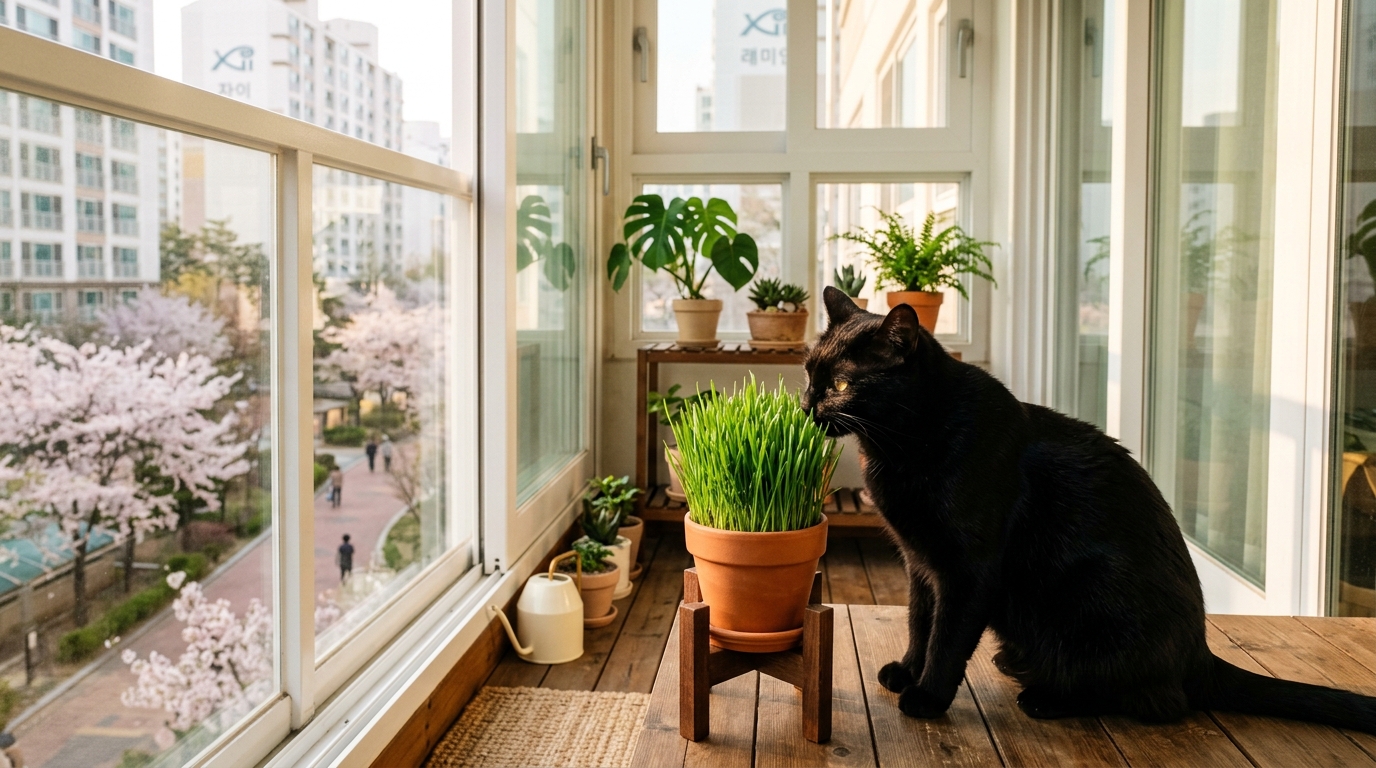
Cat grass, grown by germinating seeds like wheat, barley, or oats, is a natural alternative that satisfies the physiological instinct of wild cats to regurgitate indigestible matter.

When a cat tears off and swallows the rough, tough leaves of cat grass, this tough insoluble fiber is not digested by gastric juices; instead, it applies physical contact stimulation to the surface of the gastric mucosa. Mechanoreceptors distributed in the stomach wall detect the irritation from the rough leaves and instantly send a signal to the brain’s vomiting center. This triggers Reverse Peristalsis, a process where the direction of the gastrointestinal tract twists backward, forcing the clumped hairball in the stomach to be expelled out of the mouth (Emesis) along with stomach acid and grass fragments.

2. The Hairball Entrapment Mechanism of Psyllium Husk: Absorbing Water to Promote Intestinal Peristalsis
Psyllium husk, the outer coating of the seeds of the Plantago ovata plant, has a descending fecal expulsion mechanism that is entirely different from the vomiting-based expulsion of cat grass.

Psyllium husk is a powerful hydrophilic mucilaginous fiber that rapidly absorbs up to 40 times its weight in water. When a cat ingests psyllium husk and it reaches the stomach, it absorbs the surrounding moisture and swells massively into a sticky gel. As this swollen, viscous gel slowly moves through the digestive tract, it acts like glue, exerting an “Entrapment” effect that catches and traps scattered hairballs. When this expanded viscous mass mechanically compresses the smooth muscle of the intestinal wall, it stimulates the normal Peristalsis of the intestines. This ensures the hairballs do not stick to the stomach or intestinal walls but are safely and smoothly pushed out through the anus, mixed with the feces.

3. Medical Pros and Cons of Vomiting vs. Fecal Expulsion and Tailored Selection Criteria
Because these two dietary fiber sources have opposite expulsion methods, pet parents must accurately filter their usage based on the cat’s health condition and age.

-
Caution When Feeding Cat Grass: Cat grass is excellent as a behavioral enrichment tool that provides chewing satisfaction. However, it can induce frequent vomiting, which may lead to dehydration or reflux esophagitis, where stomach acid damages the esophageal mucosa. If your cat eats grass and repeatedly vomits clear gastric juice without a hairball, stop feeding it immediately.
-
Caution When Feeding Psyllium Husk: Psyllium husk causes zero physical distress related to vomiting, making it extremely safe for cats with sensitive esophagi or senior cats. However, if fed as a dry powder, it will actually absorb moisture from the GI tract and accelerate an ileus (intestinal blockage). You must always mix it thoroughly with plenty of water or wet food (adding a water topping) so it is completely hydrated and mushy before feeding.
4. Essential Prerequisites Before Dietary Prescription: Regular Brushing and Controlling Psychogenic Over-grooming
While cat grass and psyllium husk are excellent “post-treatment” supplements for safely expelling ingested hair, the primary rule of hairball management most recommended in veterinary medicine is to proactively reduce the absolute volume of dead hair the cat swallows.

-
Physical Removal of Dead Hair (Brushing): Before hair gets caught on the cat’s tongue and swallowed, pet parents should brush them 1 to 2 times a day to comb out dead hair. Consistent brushing alone can dramatically reduce the amount of hair entering the GI tract by more than 70%.
-
Controlling Psychogenic Compulsive Behaviors: When cats feel extreme stress or anxiety, they may exhibit symptoms of Psychogenic Alopecia (over-grooming), obsessively licking a specific area to soothe themselves. If they groom so much that they lose hair and expose bare skin, this is not a problem to be solved simply with hairball supplements; it is a psychological SOS signal. In such cases, you must first identify and resolve environmental stress factors—such as litter box cleanliness, unfamiliar loud noises, or rank conflicts in multi-cat households—to fundamentally prevent the formation of massive hairballs.
🔬 Veterinary Evidence & References
Magentalab Research Team has reviewed relevant veterinary guidelines to verify the core content.
Evaluates dietary protein dry-matter percentage (DM%) and life-stage-specific caloric requirement formulas based on clinical nutrition standards.
Nutrient Requirements of Dogs and Cats
WSAVA Global Nutrition Committee Guidelines
AAHA Weight Management Guidelines for Dogs and Cats
Pets with renal failure, pancreatitis, or metabolic disorders require therapeutic prescription diets under direct veterinary consultation.
* Evidence classification based on Magentalab evaluation standards.
Recommended Research Data 🕸️
The Real Reason Cats Refuse Still Water and Only Seek Flowing Water
Why Is My Cat’s Tail Quivering? Greeting, Urine Spraying, and When Shaking May Be a Warning Sign

Cat Matted Fur: Can You Detangle It at Home? Safe Removal and When to See a Vet
Comments (0)
No comments yet. Be the first to leave one!